
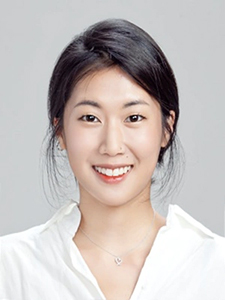
 Jiwon Um began her career in clinical psychology, working with children and their families. Today she studies how mothers’ cardiovascular-kidney-metabolic health takes shape across populations, as a data scientist at Yonsei University Health System and a PhD candidate in Biomedical Systems Informatics at Yonsei University College of Medicine, advised by Dr. Seng Chan You. She is a fellow in the Johns Hopkins Maternal Health Fellowship (2026–2028).
Within OHDSI, she serves as the APAC Community Coordinator, leading the monthly APAC Community Calls. She also contributes to network studies including CHRONICLE-DM and is part of the organizing team for the 2026 APAC Symposium.
Jiwon discusses how OHDSI has impacted her educational journey, child and adolescent development research, OHDSI and its relationship with medical AI, and more in the latest Collaborator Spotlight.
Can you discuss your background, your career journey, and what led you to your PhD studies at Yonsei University?
I studied psychology for both my bachelor’s and master’s degrees because I wanted to understand people—how they think, behave, and grow. My clinical training focused on child development: I worked with children with neurodevelopmental conditions such as ASD and ADHD and with their parents, and for over three years I also supported out-of-school youth and adolescents facing behavioral challenges. Those years taught me that a child’s health can’t be separated from the family and environment around them, a lens I still bring to every dataset. They also made clear that I wanted to work on questions that reach many families at once, not one room at a time.
That shift began during my master’s, when I joined a dementia-focused digital health project with peers from neuroscience and medicine. I went on to write my thesis as a meta-analysis of digital health interventions, which received an Outstanding Thesis Award. This has brought me to a question I still carry: how do we know the evidence is strong enough to trust?
That question brought me to Dr. Seng Chan You’s lab and to OHDSI. I try to read beyond the numbers—to the flow and context behind them: the people, systems, and decisions that every record reflects. My work brings together three threads: maternal cardiometabolic health, trustworthy medical AI, and building network studies across the Asia-Pacific.
You joined the lab of Dr. Seng Chan You, who has been a leader in OHDSI for more than a decade. Why was this lab the right fit for you, and is there a lesson or two you have learned from him that has made a major impact?
Dr. You is a leader with a sharp mind and a warm heart. He moves freely between academia and industry, and the network and experience he has built across both, and across the OHDSI community, mean he can help me find a path in whichever direction I want to grow. That openness runs through the whole lab: it welcomes a remarkably wide range of research, from clinical questions to methods and AI, and turns it into work that matters. Above all, the lab answered the question I had been carrying. Here, evidence isn’t produced by one team in isolation; it’s generated across a global network of data partners with shared standards and open methods.
One evening in late December 2024, I ended up at a dinner that was never planned. Dr. You had simply asked who wanted to join a few colleagues for a bite, and I said yes. (Maybe it was fate.) Over dinner, he asked me what my dream was—not my goal, but my dream. I told him I wanted to work internationally with real professional skills. I believe every language has its own personality, and I like who I am when I speak English: direct, casual, friendly, and quick to joke. He asked how I would feel about becoming the coordinator for the APAC region—and the very next day, he connected me with Gyeol Song. That conversation became one of the biggest turning points in my life so far. (Huge thanks to Song, another mentor of mine.)
The lesson I took from that evening is what mentorship really means. He didn’t wait until I was “ready.” He listened to what I wanted to become, trusted me first, and turned it into a real opportunity overnight. I try to do the same for others now: when new members join our APAC community calls, I listen for what they care about and connect them with the people and projects that can move them forward.
 How has being part of the OHDSI community impacted your education, and what excites you about being part of the community?
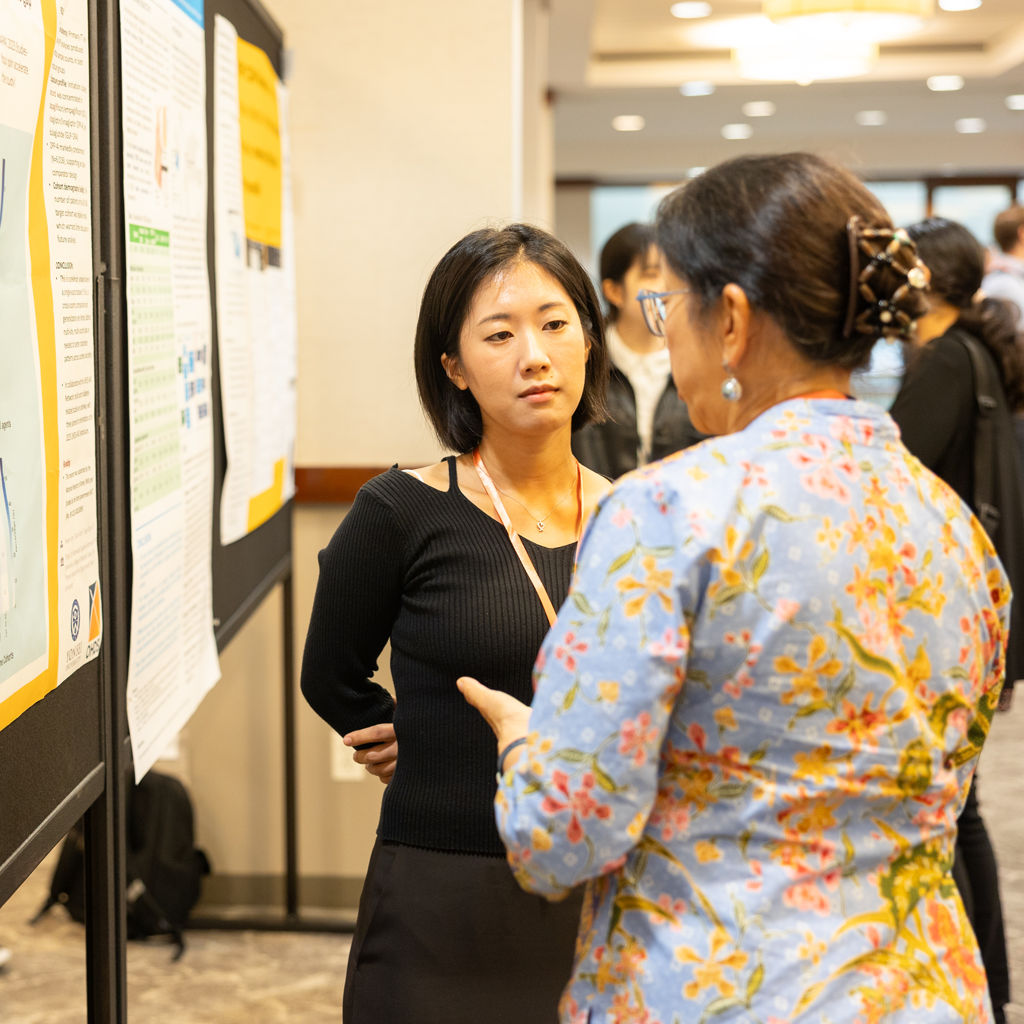
As the OHDSI APAC community coordinator, I work across time zones and in a language that isn’t my first—and I’ve learned to speak first. Recruiting presenters and onboarding new chapters month after month taught me to ask the question, send the email, and say “let’s find out.” That became the part of the work I love most: making a room open enough for everyone to speak.
Doing this month after month taught me to ask the question, send the email, and say “let’s find out.” It turned out to be what I do best: connecting people, and making a room open enough for everyone to speak.
OHDSI has also shaped me as a researcher. I authored CHRONICLE, the open-source study package for our ongoing multi-region network study of type 2 diabetes across Asia. I also launched a pre-registered community survey on medical AI, because OHDSI is driven by its collaborators, and what they think and where they see this era heading matters. None of it would have been possible without generous partners. I spent my school years in Seoul, in a highly competitive academic environment where I often felt I had to be perfect before I could speak up. OHDSI gave me the opposite: a place where asking, trying, and even failing in public is how we grow, together.
Looking ahead, I want to help change the care that patients and families actually experience, contributing to the systems and policies behind care, not only the papers about it. OHDSI is where I’m learning how.
You list Child and Adolescent Development among your primary research interests. Studying younger populations often presents unique challenges in observational data. How does the OHDSI framework help overcome these hurdles, and what drew you to this focus area?
My path to child and adolescent health runs through the mother. Maternal health shapes not only a child’s psychological development but their biological and physiological development as well, so I’m starting where a child’s health begins. My current work focuses on maternal cardiovascular-kidney-metabolic (CKM) health, and I recently shared an early idea for a gestational diabetes characterization study with the OHDSI community at the Maternal Health Fellowship symposium—something I’m still learning my way into.
This work shows exactly where observational data gets hard for mothers and children. Pregnancy is a short, time-bounded window, so the timing of every exposure and outcome matters. Mother and child often live in separate records; in Korea, for example, our national mother–infant linked cohort has not yet been converted to the OMOP CDM. And many outcomes are rare, so a single site seldom has enough patients to answer a question on its own.
This is where OHDSI helps. A shared vocabulary and common data model let us define pregnancy episodes and outcomes once and run them across many sites, turning several small samples into a meaningful one.
The other answer is people. This August, I was selected for the Johns Hopkins Maternal Health Fellowship, a two-year program in which researchers from medicine, statistics, epidemiology, and public health choose a question together and carry it through to a publication. I’m grateful to Dr. Paul Nagy, who leads it and shows us how a researcher should approach science. Programs like this, along with the tutorials and datathons at our symposia, help researchers who want to try something new get over the first hurdles. OHDSI is full of people who are both scientists and educators, and they’ve shown me what kind of mentor I want to become.
 You put out a recent survey focusing on how OHDSI members view the way medical AI is reshaping how observational research evidence is generated and used. What are you hoping to learn, and why is it important to get perspectives from around the world on this topic?
I’ve always been interested in people: what they think, and what actually shapes their choices. That’s why, alongside the large-scale data I work with every day, I value surveys. They let us hear directly from the people doing the work.
Medical AI, especially foundation models and large language models, is starting to touch every step of observational research, from writing analysis code and building cohort definitions to summarizing results. I designed and pre-registered “OHDSI in the Era of Medical AI” around a simple but important question: as AI enters the evidence pipeline, does standardization through the OMOP CDM still serve as a foundation of trust in health data? We want to learn where members expect AI to help, what worries them, and what they would need before trusting AI-assisted evidence, such as transparency, validation, and reproducibility. The protocol is openly available on GitHub.
Perspectives from around the world matter because our starting points are so different. A team with mature infrastructure may ask, “How quickly can we adopt this?” A team building its first CDM may ask, “Will this widen the gap?” If we only hear from a few regions, we risk designing the future of trustworthy medical AI around a single reality.
My psychology background shaped the design, too. Some of the most important insights live in the open-ended responses. When people describe their hopes and concerns in their own words, they can take you somewhere you never expected—and I think that’s what good science does as well.
You are part of the team organizing the 2026 APAC Symposium, which returns to Korea this November. What should people expect out of APAC 2026, and what are some exciting developments around the OHDSI APAC community over the last year?
Hosting the 2026 OHDSI APAC Symposium at Yonsei University on November 13–15 means a lot to everyone in our community, and especially to our group. As part of the organizing team, I’ve focused on outreach and communications, promoting the event to institutions in Korea and around the world, so I’ve watched the program come together piece by piece. The theme, “From Theory to Implementation Using AI,” reflects where APAC is today: we’ve moved past asking whether OMOP can work in our region to showing what it can do. Attendees can expect hands-on tutorials, datathon, collaborator showcase, and results from a wide range of studies across the region. We’re welcoming participants from Korea, Singapore, Japan, Australia, Malaysia, Taiwan, and beyond.
 APAC has grown rapidly this past year, with new chapters forming across the region. Here in Korea, Dr. You continues to be our guide, alongside Prof. Rae Woong Park and Prof. Chungsoo Kim, who returned to Korea this year and has become a steady pillar of our APAC community. Jason Hsu at Taipei Medical University in Taiwan has done a great job, recognized this year with a Titan Award (congratulations, Jason!), and Nicole Pratt in Australia has put tremendous effort into building AHDEN. The D4L team (Ben Illigens, Tim Walz, and Peter Hoffmann) has been building the infrastructure researchers need to make OMOP feasible. Prof. Feng Sun’s group at Peking University continues to collaborate with us and has opened data from regions of China not yet studied in OMOP. ‘Mornin’ Feng in Singapore has been a great mentor to many of us and always lights up the room. And there are so many others who show up every month. Go APAC!
From the coordinator’s seat, I see this growth in small moments: a first presentation on a community call, an email that introduces two people with the same research question. So I see the symposium less as a finish line and more as a meeting point—a place to share what we’ve built and to start the collaborations that will shape the next year.
What are some of your hobbies, and what is one interesting thing that most community members might not know about you?
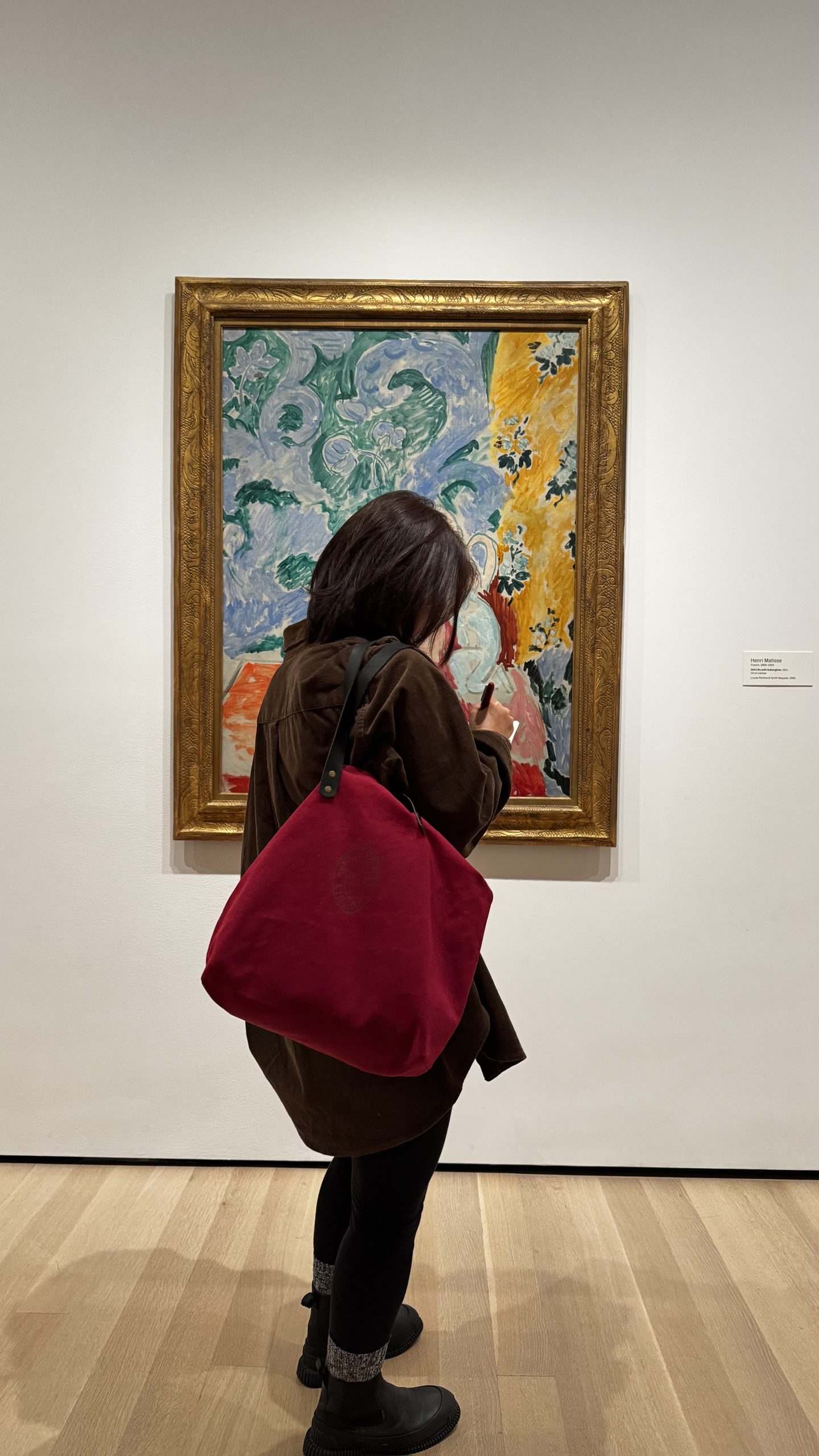
Outside of work, you’ll usually find me moving—yoga, running, swimming—or wandering slowly through an art museum. My favorite artist is Kim Tschang-Yeul, known for his paintings of water drops. After the Korean War, he spent years in New York and Paris struggling to find a voice of his own as an artist. Then, one morning in the early 1970s, he noticed water drops catching the sunlight on a canvas. In them, he found what he had been looking for, and he went on to paint them for nearly fifty years.
What moves me isn’t his success but his repetition. Standing in front of his paintings, I feel that everything he lived through—grief, hardship, perseverance, and small joys—is condensed into each drop, and that he found it simply by showing up, day after day.
I think scientists are artists, too. We try, fail, and keep honing our craft until we’ve made something of our own. When an analysis fails for the tenth time, I think of him. A single drop can look small, but painted again and again, it moves people.
My biggest goal isn’t a title. It’s to become a healthy, grounded adult: someone people can lean on, and who knows how to lean on others, too. This community keeps showing me what that looks like.