
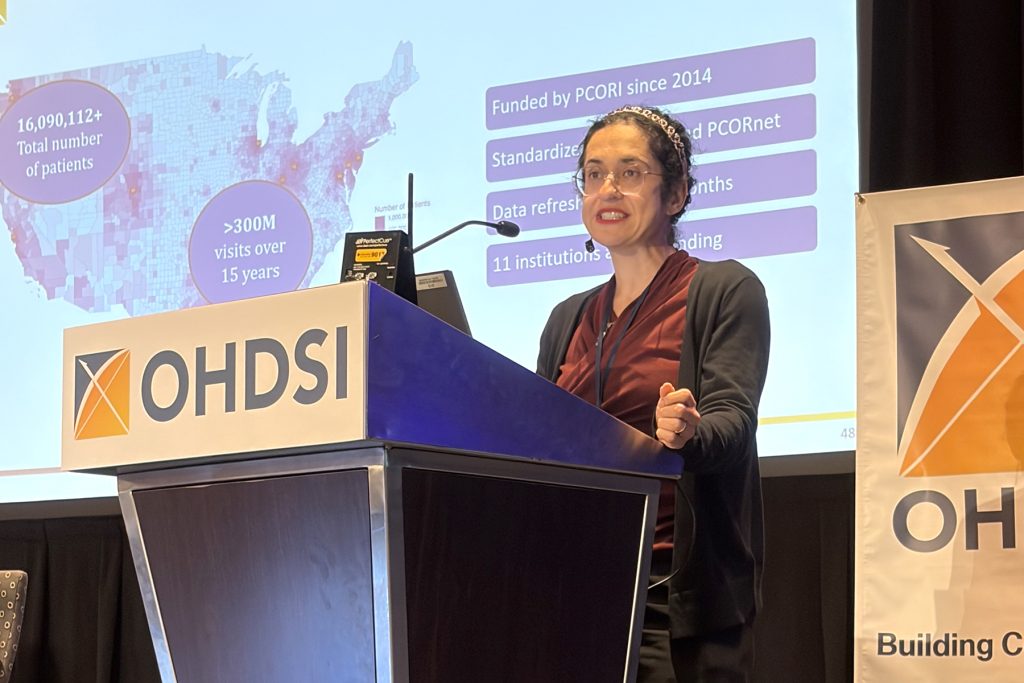
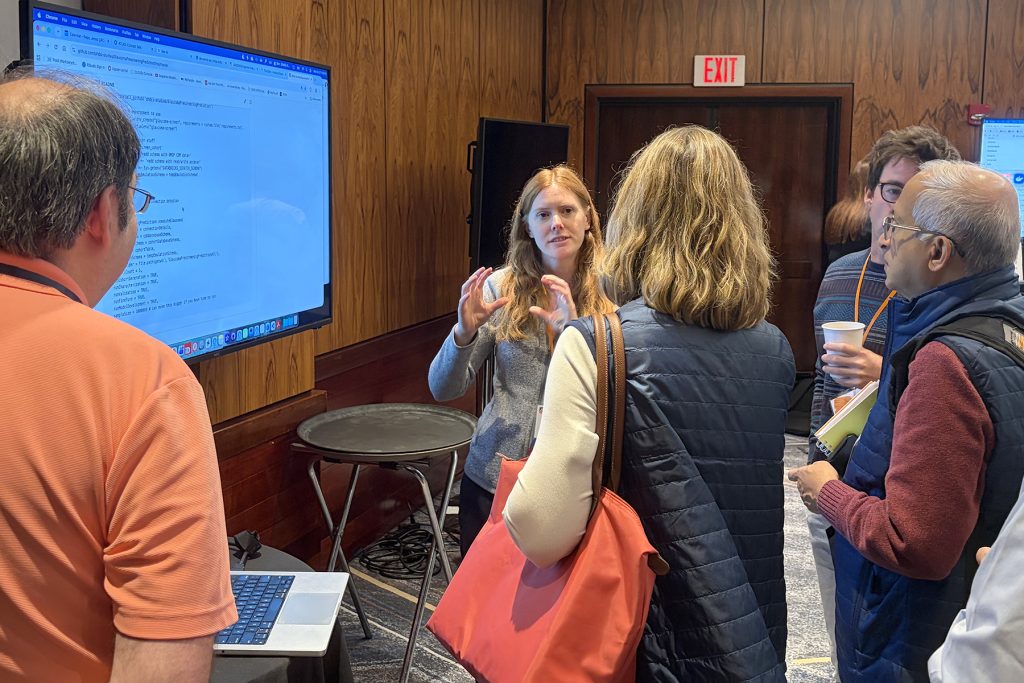
Welcome to the OHDSI 2026 Global Symposium! This year, more than 420 collaborators from across six continents came together to build upon our shared commitment to generating real-world evidence that transforms healthcare worldwide. Through three days of inspiring research presentations, interactive discussions and community connection, we celebrated how far we’ve come, and continues to build connections as we plan the path forward together.
We’re thrilled to share these resources with you. Explore this page to access presentation slides, research posters, software demos, and full video recordings from the main conference and tutorials as they become available.
George Hripcsak welcomed the community to the 12th OHDSI Symposium, reflecting on where the network has been and where it is headed. Along with acknowledging the sponsors, committee members, and Titan Award nominees who power the community, he celebrated major 2026 milestones across every order of magnitude—spanning more than a decade of collaboration, 100 countries, over 1,100 publications, releases including OMOP CDM v5.5 and ATLAS 3.0, and surpassing one billion standardized patient records globally.
George then addressed the rapid rise of artificial intelligence, highlighting both its promise and why a human-centered, careful approach remains vital. He pointed out that while AI continues to get smarter, true evaluation is difficult because things aren’t always what they seem on the surface. Ultimately, he emphasized that AI needs a firm foundation to be safe and effective—and OHDSI provides that essential bedrock of transparent, trustworthy health evidence against which new AI recommendations can be checked and verified.
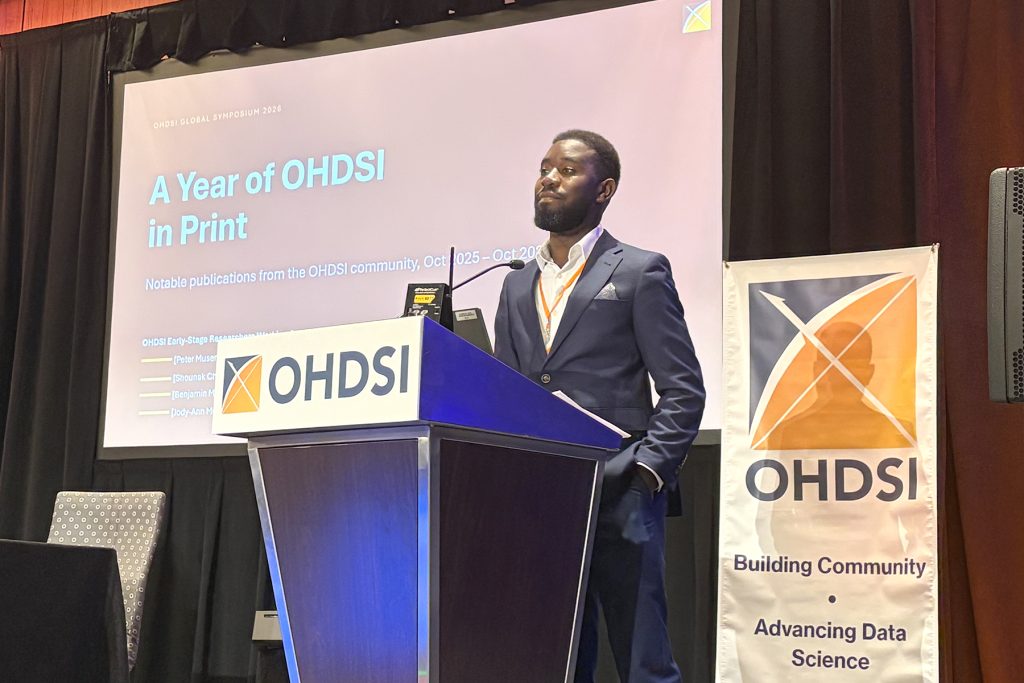
In an engaging debut session that was warmly received across the community, representatives from the Early-Stage Researchers (ESR) Working Group—Peter Musenge, Shounak Chattopadhyay, Benjamin Martin, and Jody-Ann McLeggon—took the main stage to deliver OHDSI’s first-ever formal “Year in Review” presentation.
The presentation celebrated a standout year of scientific output, tracking more than 170 publications across 88 journals and highlighting the growing leadership of emerging scholars within the network. Walking attendees through OHDSI’s core pillars (clinical applications, methods research, data standards, and open-source analytics) the speakers highlighted key studies ranging from large-scale cardiovascular and cancer outcomes to novel federated algorithms and multimodal imaging extensions. With early-stage researchers contributing to more than 40% of this year’s Collaborator Showcase posters and authoring high-impact papers worldwide, the session not only captured the breadth of community scholarship over the past twelve months but also showcased the vibrant future of OHDSI leadership.
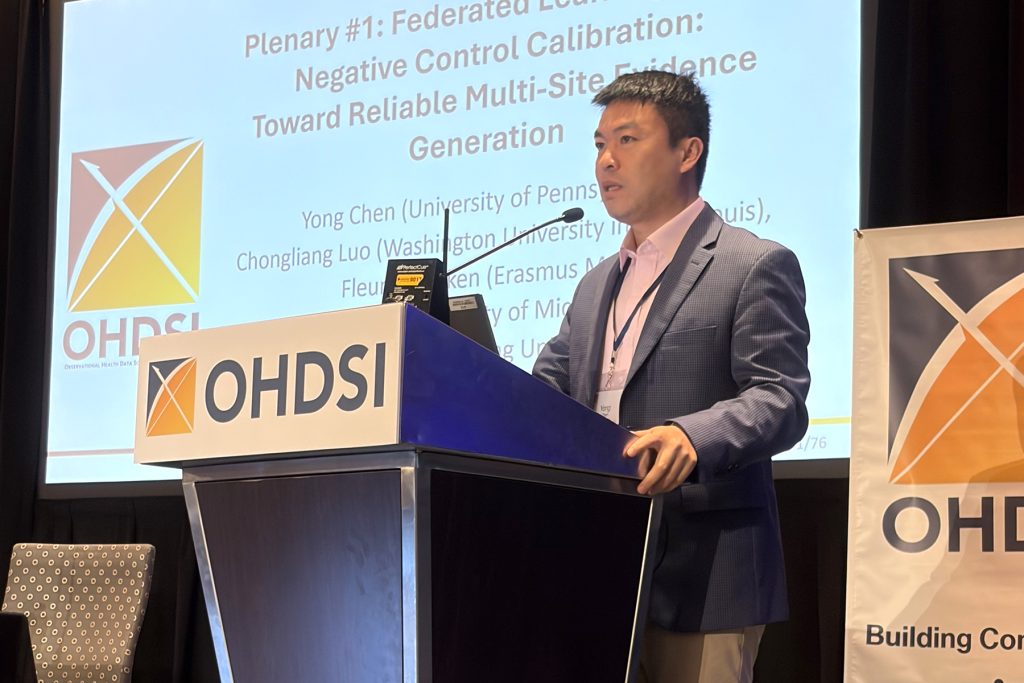
The first plenary explored methodological frameworks designed to generate trustworthy clinical evidence across distributed networks without compromising patient privacy. The speakers demonstrated how data heterogeneity across institutions can be addressed using privacy-preserving, one-shot, and lossless algorithms like MOSAIC and DLMM. They shared real-world applications across COVID-19 hospital outcomes, pan-cancer proteomics, and Alzheimer’s disease target trial emulations, while explaining why federated learning improves individual prediction model stability. In parallel, the session tackled residual confounding through Bayesian joint evidence synthesis with profile likelihoods and Systematic Error Reference Outcomes (SEROs) to detect and calibrate unmeasured bias. Finally, the panel highlighted AI-driven tools, including the ECHO agent for natural-language cohort generation and TrialMap for optimizing clinical trial eligibility.
Presenters: Yong Chen (University of Pennsylvania), Bingyu Zhang (University of Pennsylvania), Fan Bu (University of Michigan), Yumou Qiu (Peking University) Chongliang Lou (Washington University in Saint Louis), Fleur Vereijken (Erasmus MC)
This plenary showcased how real-world research challenges push the community to customize core OHDSI tools. One talk demonstrated how replacing SQLite with DuckDB inside Andromeda slashed runtimes from 14 hours to 2 hours for COVID-19 vaccine trial emulations. Another showed how reviewer feedback on a diabetes study prompted incorporating Inverse Probability of Censoring Weighting into CohortMethod to address informative censoring. The session also highlighted industry efforts to operationalize OMOP via Picard for study management and CohortPrevalence for disease forecasting. Finally, presenters explored adapting the OMOP Common Data Model for pediatric research by introducing specialized immunization tables, growth z-scores, and tailored quality modules to meet children’s unique health needs.
Presenters: WIlliam J. O’Brien (Johnson & Johnson), Hanieh Razzaghi (Children’s Hospital of Philadelphia / University of Pennsylvania), Hsin Yi “Cindy” Chen (Columbia University), Martin Lavallee (Boehringer Ingelheim), Scott DuVall (PurpleLab)
The symposium’s final plenary examined how national initiatives and regional chapters provide the foundation and funding necessary to sustain OHDSI’s mission. Presenters chronicled the rise of national nodes like OHDSI UK and the HERON-UK network, highlighting the harmonization of observation periods, local ethnicity codes, and Trusted Research Environments to power reproducible studies across tens of millions of patients. A hospital perspective demonstrated how local OMOP adoption enables rapid surgical equity analyses and advances hospital-based medical device surveillance. The session also provided a framework for standardizing complex sociodemographic variables across borders, examined strategies for turning grassroots volunteer energy into lasting institutional capacity across Latin America, and emphasized how local data nuances ultimately inform and strengthen global OHDSI standards.
Presenters: Edward Burn (University of Oxford), Daniel Prieto-Alhambra (University of Oxford), Lydia Briggs (Great Ormond Street Hospital for Children NHS Foundation Trust), Jennifer Lane (Queen Mary, University of London), Melanie Philofsky (EPAM Systems), Julio Oliveira (Precision Data)
1) Evaluating Semantic Loss in EHR Terminology Mapping in Common and Rare Diseases
Presenter: Melanie Philofsky (EPAM Systems)
2) Using OWL Reasoning to Surface Hidden Tensions in the OHDSI Standardized Vocabularies
Presenter: William Baumgartner (University of Colorado Anschutz Medical Campus)
3) Ontology-Governed LLM Search for Safe Drug Concept Mapping in Air-Gapped Healthcare Environments
Presenter: Seung Ju Yun (Chonnam National University Hwasun Hospital)
4) EPISODE/EPISODE_EVENT-Based Representation of Microbiology Results and Antimicrobial Susceptibility Testing in OMOP CDM v5.4
Presenter: Polina Talapova (SciForce/Tufts CTSI)
5) Making the most of What We Have: Regional Characterization of OHDSI Network Database
Presenter: Evelyn Goh (National University of Singapore)
1) ORBIT: One-shot Reconstruction-Based Inference via Tensorization
Presenter: Qiaoshi Yang (University of Pennsylvania)
2) Comparative performance of the concurrent comparator design with existing vaccine safety surveillance approaches on real-world observational health data
Presenter: Shounak Chattopadhyay (University of Virginia)
3) Implementing Population Health Risk Analytics on a StandardizedEHR Data Layer: Evaluation and Framework Development
Presenter: Haeun Lee (Johns Hopkins University)
4) UNO: Neural Pruning Enhances AI Reliability of Observational Data-based Findings
Presenter: Yue Wu (University of Pennsylvania)
5) A Multi-Database, Retrospective, Long-term, Observational Safety Study of Pediatric Patients with Inflammatory Bowel Disease
Presenter: Kevin Haynes (Johnson & Johnson Innovative Medicine)
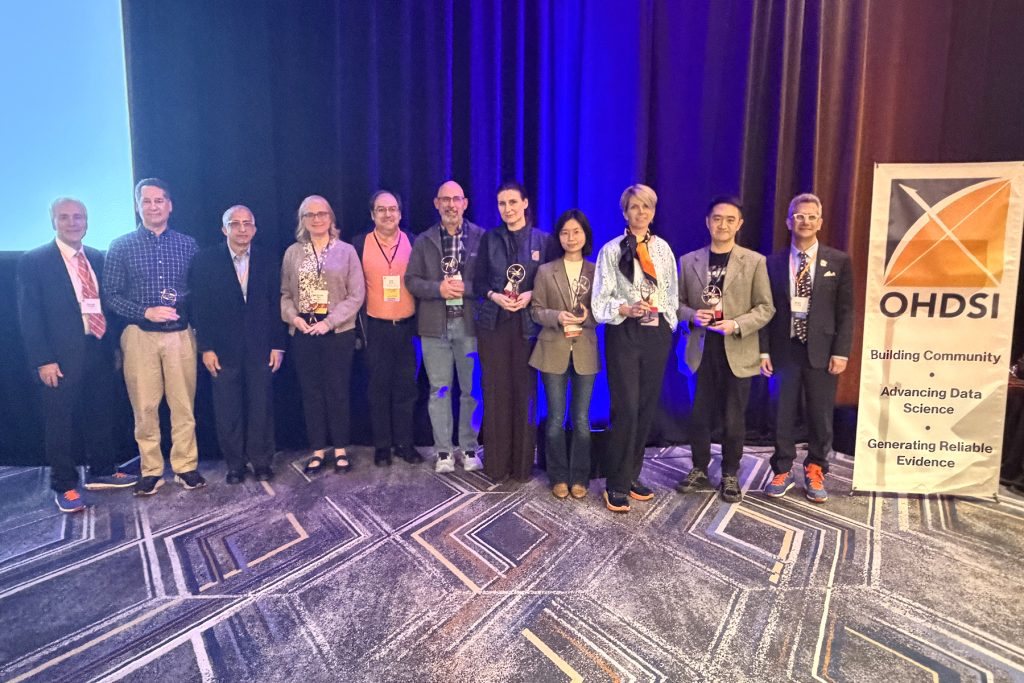
The symposium concluded with the presentation of the 2026 Titan Awards, celebrating extraordinary contributions across the community over the past year. Honors were presented across seve important categories and they highlighted the relentless dedication and collaborative spirit powering OHDSI’s global mission.
Patrick Ryan then delivered the closing talk, shifting focus to the heart of real-world evidence: the individual human journey. Focusing on the concept of data sonification—translating clinical timestamps, diagnoses, and medication exposures into audio and musical notes—he urged the community to move beyond abstract data points and truly “listen” to the patient story. In a fun and interactive twist, three collaborators joined Patrick on stage to play instruments while the entire audience was invited to join in using handheld percussion to play along with the patient timeline. Making music together from actual clinical data offered an unforgettable reminder that behind every standardized record is a real person whose story gives OHDSI its purpose.
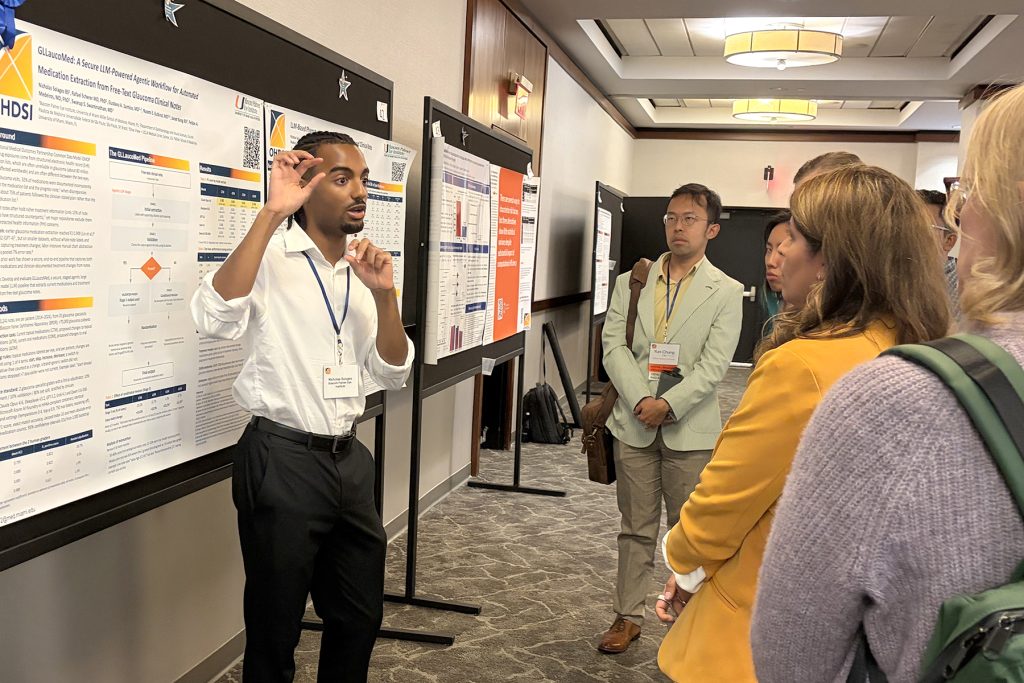
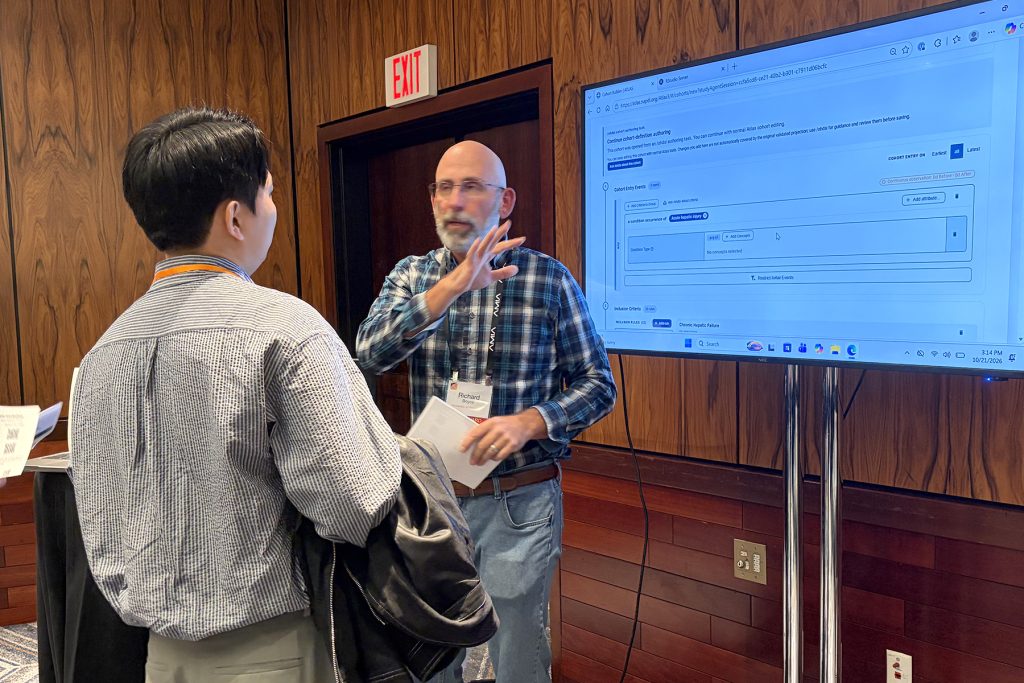
This year’s Collaborator Showcase reflected the growing energy of our global community with a record number of submissions spanning observational data standards, methodological research, clinical applications, and open-source analytics.
Attendees explored more than 160 posters and software demonstrations—including significant leadership from our early-stage researchers—spotlighting innovative real-world evidence initiatives from around the world. For those looking to dive deeper into the science and tools presented, all collaborator posters, software demonstrations, and their accompanying brief reports are available to view and read online.
There were 11 OHDSI Symposium tutorials that were designed and led by members of the community. Videos and slides from each will be posted when available. Check out the tutorial page to learn about the different offerings.