OHDSI Africa Hosts Inaugural Symposium

Nov. 10-12, 2025 • Joint Clinical Research Centre (JCRC) & Mestil Hotel Kampala

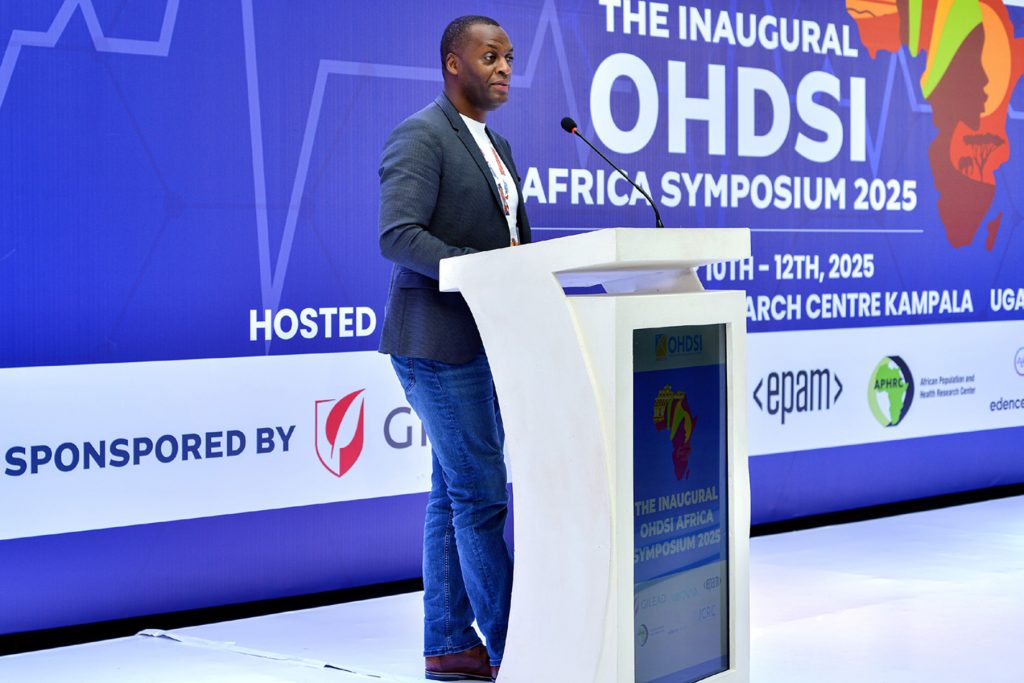
The Joint Clinical Research Centre (JCRC), in partnership with the global OHDSI community, successfully hosted the inaugural OHDSI Africa Symposium from November 11-12, 2025, at the Mestil Hotel in Kampala, Uganda. This landmark event was preceded by a pre-symposium training day on November 10, 2025, held at the JCRC headquarters.

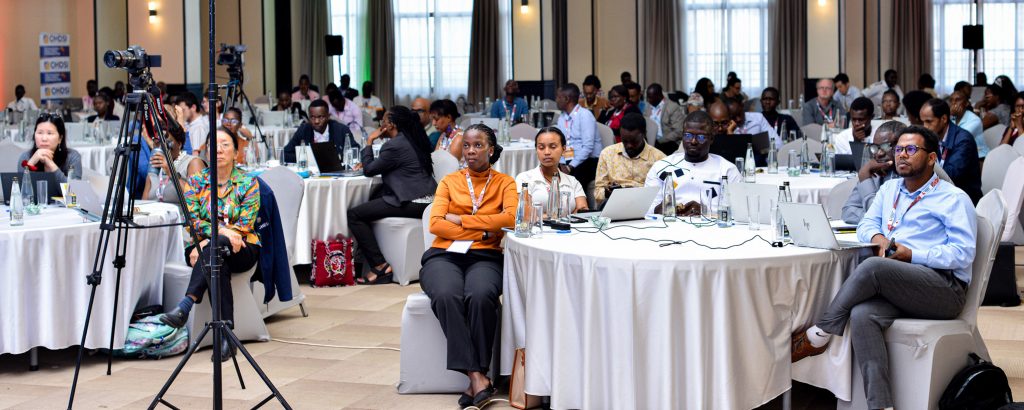
The symposium, themed “Building a Data-Driven Future for Health in Africa,” convened over 165 registered participants from across Africa and the globe, including health data scientists, clinicians, researchers, policymakers, and digital health experts. The event served as the official launchpad for the OHDSI Africa Chapter, creating a foundational network for sustainable, data-driven health research across the continent.

A heartfelt thank you to all our sponsors, partners, volunteers, speakers, and attendees who made this inaugural Africa symposium a success and helped strengthen the OHDSI community across the continent.

Nov. 10: Pre-Symposium Training

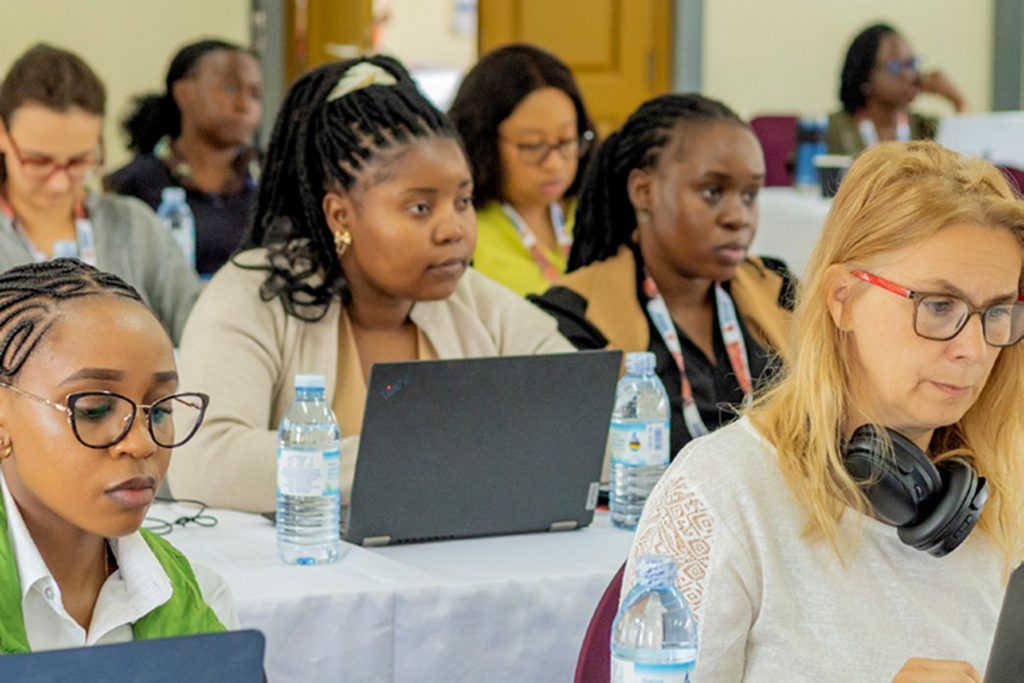
A total of 75 participants attended the one-day pre-symposium training that was conducted at Joint Clinical Research Centre (JCRC). Participants were trained in three separate groups by a team of 14 expert trainers representing different organizations across Africa, Europe, Asia, and the United States.

Instructors guided each group through foundational concepts and hands-on application of OHDSI methodologies. The training created an interactive learning environment for attendees to explore implementing the OMOP Common Data Model.

Tutorial session 1: OHDSI/OMOP Introduction

The instructors walked the groups through how OHDSI was launched in 2013 following successful OMOP experiments that used observational data to study drugs and their medical outcomes as a collaboration of the US Government, the pharmaceutical industry, FDA and scientists. The session helped set the foundation for the rest of the training by giving everyone a clear picture of the global journey that Africa is now joining.

Tutorial session 2: OMOP CDM and Standardized Vocabularies

In this session, we explored how the OMOP CDM uses established medicine vocabularies from repositories such as RXNorm, SNOMED, etc to allow standardize health data. We looked at the OMOP CDM’s structure which organizes data tables around patients, vocabularies and conventions. We learned to search the vocabulary table using the OHDSI tool called Athena. Discussions were made on the need to update selected vocabularies with African-specific variable where possible – to allow inclusive harmonization.

Tutorial session 3: The OMOP Conversion Process (ETL)

The session elaborated the ETL process that starts with data experts and CDM experts designing the extract, transform and load (ETL) to standardize the format and terminology of the source data. The data is scanned using the White Rabbit OHDSI tool and used by the Rabbit in a Hat tool to connect the source data to the CDM tables. When the vocabulary doesn’t contain the terms in the source data, we create a source to OMOP Vocabulary Concepts map using the Usagi OHDSI tool. The ETL is then implemented using a preferred programming language e.g. R, Python or PostgreSQL. A quality check is performed using the Achilles tool to ensure the CDM logic has been correctly applied.

Tutorial session 4: Using the Data Quality Dashboard

This session focused on the Data Quality dashboard, which is used to assess how well the data meets the standards of the OMOP CDM. The Data Quality dashboard evaluates plausibility, conformance and completeness of the data, showing which data points pass or fail the verification and validation against the CDM thresholds.

Tutorial session 5: Hands-on Evidence Generation with OHDSI Tools

These sessions provided practical use of OHDSI software for analysis. Some of them include phenotypes in real-world data as finding patients with a certain condition or characteristic in a dataset. Once the condition and codelist are available, the cohort is obtained using a cohort constructor or Atlas and cohort diagnostics examined using the PhenotypeR package. Also network studies in various OMOP CDM initiatives were conducted using OHDSI tools in R programming language e.g. OmopSketch to summarize the dataset, CodelistGenerator to find concepts, CohortConstructor to create cohorts, PatientProfiles to identify patient characteristics, CohortCharacteristics to summarise cohorts, IncidencePrevalence to summarise frequency of cohorts, and PhenotypeR to generate an overview of a cohort.

Nov. 11: Symposium Day 1

Session 1: Opening Remarks

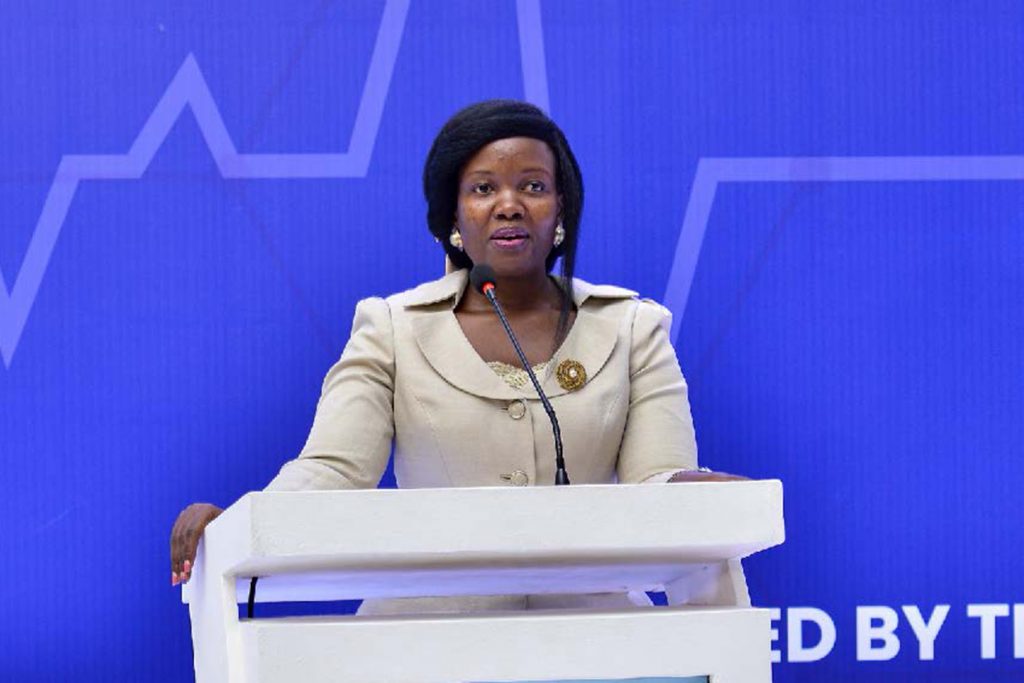
The symposium was officially opened with remarks from Dr. Cissy Kityo, Executive Director of JCRC, who highlighted the critical need for data harmonization and interoperability to support evidence-based policy and precision medicine in Africa. She also thanked the sponsors, acknowledging their crucial role in making this first-ever OHDSI Africa Chapter Symposium possible.

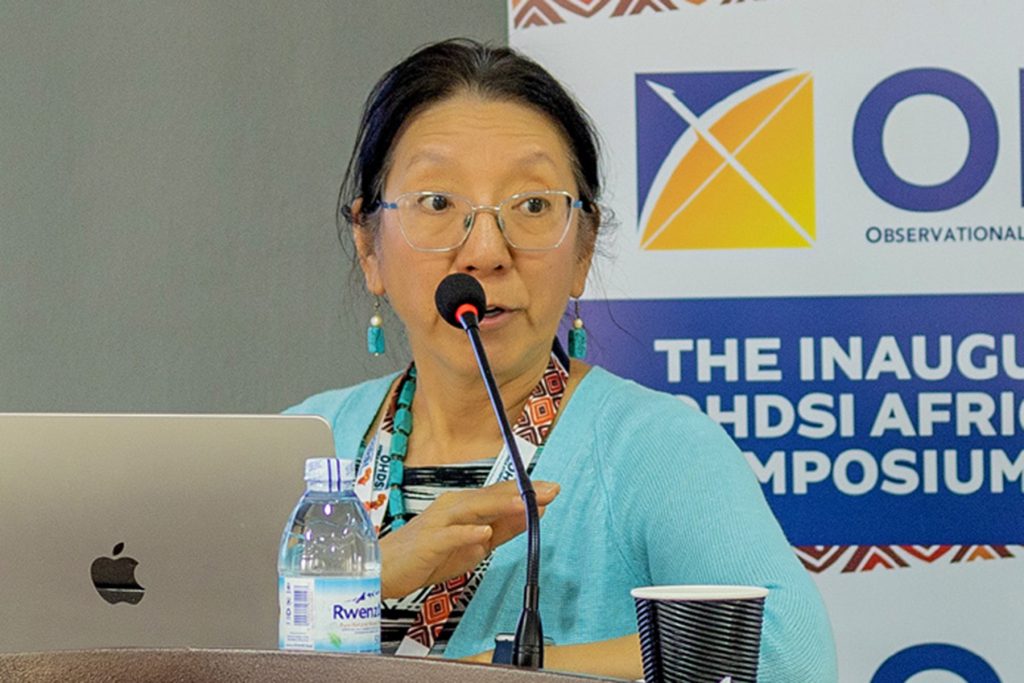
Dr. Mui Van Zandt (IQVIA, OHDSI APAC Lead) provided a global perspective on OHDSI’s community-driven mission, explaining how collaborative efforts worldwide advance observational health research and the sharing of standardized health data to improve patient outcomes.

Mr. Paul Mbaka from the Uganda Ministry of Health’s Health Informatics Division delivered the government’s perspective, emphasizing Uganda’s commitment to strengthening health data systems and the importance of supporting initiatives like OHDSI Africa to enhance national health data infrastructure and informed decision-making.

VIDEO: Session 1

Session 2: OHDSI Implementations Across Africa

Session Chair: Alex Asiimwe, Gilead

This session showcased tangible proof that OMOP CDM implementation is feasible and valuable across diverse African contexts.

Presenters

Prof. Cynthia Sung (Duke-NUS): History of OHDSI Africa & Country Representation. Outlined the chapter’s growth and purpose.

Dr. Francis Kanyike (JCRC): Unlocking Ugandan HIV Data. Presented the center’s experience converting EMR data to OMOP CDM, characterizing profiles of patients with HIV, Hepatitis B, and C, and establishing a reusable data framework.

Dr. Agnes Kiragga (APHRC): Data Science without Borders. Presented this project harmonizing data across Ethiopia, Cameroon, and Senegal while respecting data sovereignty, though noting challenges like low data-sharing consent for mental health data.

Freija Descamps (EdenceHealth): Rwandan Hospital Network.  Detailed the LAISDAR project, a federated network of 14 hospitals in Rwanda, initially focused on COVID-19 data and now expanding to other research.

Dr. Sylvia Muyingo (APHRC): Harmonizing Mental Health Data. Highlighted efforts to create a standardized framework for mental health data in Africa, a critically under represented area. 

VIDEO: Session 2
SLIDES: Session 2

Session 3: African Policymaker Perspectives

Session Chair: Damazo Kadengye

Presenters

Dr. Bekure Tamirat (Africa CDC) discussed the urgent need for a continental Health Data Governance Framework to harmonize standards and build trust across 55 member states.

Dr. Charlie Maere (EGPAF) discussed strengthening Public Digital Infrastructure: OMOP as the Standard for Health Data Analytics for Governments.

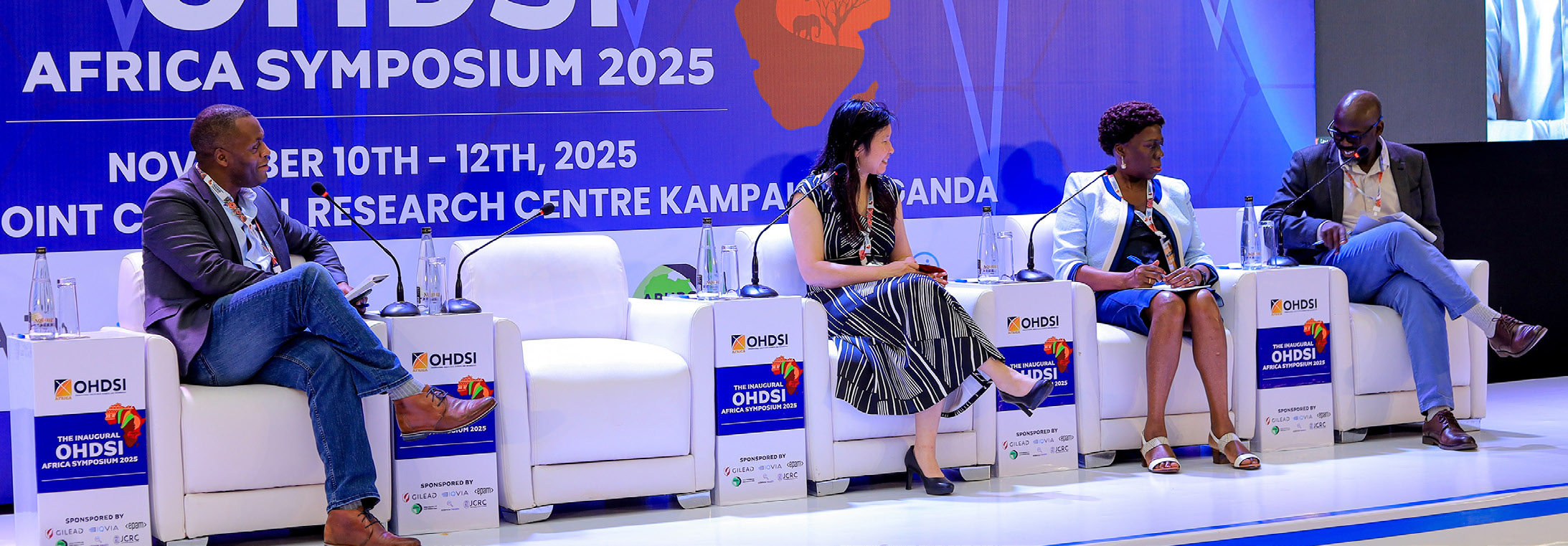
Panel Discussion: How Can OHDSI Support Policymakers?

Moderated by Dr. Alex Asiimwe (Gilead Sciences).

The panel, featuring Dr. Cissy Kityo (JCRC), Mr. Paul Mbaka (Uganda MOH), Dr. Mui Van Zandt (IQVIA), Dr. Bekure Tamirat (Africa CDC), and Dr. Gregory Ganda (Kisumu County, Kenya), engaged in a robust discussion. Key takeaways included:

  • The need for regulatory guidance on Real-World Data (RWD) in Africa.
  • The importance of publishing findings and creating policy briefs to translate OHDSI work into patient care.
  • The challenge of developing local guidelines due to limited exposure to global best practices.

VIDEO: Session 3 Panel
SLIDES: Session 3
Session 4: Collaborators Showcase & Keynote

#TitleAuthorsLink to abstract
1.Using OpenAI and RxNorm to standardize medication lists from Low and Middle-Income CountriesAdam Bouras, Issam Bouizou

https://drive.google.com/file/d/1i2N3BVeN_WYnOKP7ld4-A68SXMKUYTJs/view?usp=drive_link


2.Machine learning-based predictive modeling for viral load suppression among HIV/AIDS patients on antiretroviral therapy in Sub-Saharan AfricaAmanuel Worku

https://drive.google.com/file/d/16ewmf4bTxD3g5KOjSxi1KyRS_WLcuzZ0/view?usp=drive_link


3.Malaria Hazard and Risk Modeling using Geospatial Technology-Based Spatial Multi-Criteria Evaluation Techniques: The Case of West Wollega, Oromia, EthiopiaBirhanu Kenate

https://drive.google.com/file/d/1qImlnydjkKv94cNFM6cy4DAjST_5uYdY/view?usp=drive_link


4.Integrating Open Cohort HDSS Data into the OHDSI Ecosystem: Population-Level Estimation in Rural Uganda.Collins Gyezaho, Dan Kajungu

https://drive.google.com/file/d/1DoCQlsD2IUtJ5mILF0Zq8e8Pj1UjVnmQ/view?usp=drive_link


5.edenceHealth RxNorm BuilderSilvia Jimenez, Lore Vermeylen

https://drive.google.com/file/d/1QVvT1F4QH85Py6R9XYFvSLtQk8FuTYDx/view?usp=drive_link


6.A Modular Framework for Data Harmonization: Enhancing Quality and Efficiency in Healthcare ETL Pipelines

Isaac Claessen

,Silvia Jimenez Navarro, Shirah Cashriel, Panagiotis Gialernios

https://drive.google.com/file/d/1wGQqsdc031I4k56o7b9jAdkUqiWJvYAT/view?usp=drive_link


7.Integrating Artificial Intelligence into Health Data Analytics: A Context-Aware Methodology for Africa.Mary Atieno Juma

https://drive.google.com/file/d/18B0wgm1SX5Ac44y2Uv5R4PuGMJkJ9pRi/view?usp=drive_link


8.Unlocking Testing: Applying Anderson’s Behavioral Model to Understand HIV Test Access Among Young Tanzanian WomenMesfin Abebe, Yordanos Sisay Asgedom, Amanuel Yosef Gebrekidan, Habtamu Endashaw Hareru, Tsion Mulat Tebeje

https://drive.google.com/file/d/1n_GyOigNGPO7t_BDMjNJBUut3rJ4rO7z/view?usp=drive_link


9.Standardizing Ethiopia’s National ART Program Effectiveness Study (NAPES) Dataset to the OMOP OHDSI Common Data Model

ulugeta Gebremariam Tadele, Belayneh Endalamaw Dejene, Fikregabrail Aberra Kassa, Tsegaye Hailu, Dagim Hailegebrel, Liya Shimeles, Yordanos Sintayehu, Aklilu Alemu, Rawleigh Howe, Bethlehem Adnew, Alemseged Abdisa


https://drive.google.com/file/d/1Pb1-lBGCwaW-mntg1BZ1Q7lH7vWtcPJZ/view?usp=drive_link


10.Transforming Breast and Cervical Cancer Screening Data into the OMOP CDM: Early Implementation Insights from Senegal

Ousmane Diop, Rachel Odhiambo, Abdoulaye Samba Diallo, Ousmane Diouf, Bakary Dembo Diatta, Mamadou Lamine Cissé, Fatou Mbaye, Yacine Amet Dia, Mame Sokhna Gueye, Aminata Dia,  Abdou Padane, Nafissatou Leye, Seyni Ndiaye, Abdoulaye Leye Sarr, Maryline Aza-Gnandji, Mamadou Ndao, Astou Guèye, Steve Bicko Cygu, Samuel Iddi, Miranda Barasa, Agnes Kiragga, Moussa Sarr, Souleymane Mboup, Aminata Mboup


https://drive.google.com/file/d/1CcC58TyP-azLBgtT85suzikgTvL-fgnp/view?usp=drive_link


11.Integrating Francophone Health Data into OMOP with hybrid Human-AI approach

Ousmane Diop, Rachel Odhiambo, Ousmane Diouf, Abdoulaye Samba Diallo, Bakary Dembo, Diatta, Steve Bicko Cygu, Samuel Iddi, Miranda Barasa, Agnes Kiragga, Moussa Sarr, Souleymane Mboup, Aminata Mboup


https://drive.google.com/file/d/1WcDDL5tOg_65RA3NxZlBr2VEgy1RqQ2n/view?usp=drive_link


12.Harmonizing questionnaire data in OMOP: learnings from the EORTC QLQ vocabularySebastiaan van Sandijk, Vlad Korsik

https://drive.google.com/file/d/1_X1SfHtsv9P-Gza7LkPjC93_r5lUwINe/view?usp=drive_link


13.Characterization of US Standard Certificate of Birth Data Using OHDSI ToolsYacob Gebretensae, Benjamin Martin, Khyzer Aziz, Paul Nagy, Cynthia Sung

https://drive.google.com/file/d/1nzKdzuX5JMNefhCFvxb_MC6fviP6eo0z/view?usp=drive_link


14.

From Fragmentation to Federation: A Multi-Partner OMOP Implementation in Uganda Enabling Global Real-World Evidence Generation


Francis Kanyike, Annet Nanungi, Harriet Dickinson, Atif Adam, James Brash, Thu Do, Caroline Otike, Michael Bogart, Alex Asiimwe, Mui Van Zandt,  Cissy Kityo Mutuluuza


https://drive.google.com/file/d/1k2FjLGfXkXXzyIQpowmjvrb3-dZkK8IR/view?usp=drive_link


Lightning Talks 

Lightnig talks provided a platform for emerging researchers.

  • Building African Health and Demographic Surveillance Systems (HDSS) Data management Capacity (Ivan Busuulwa, African Population & Health Research Center (APHRC))
  • Enabling Data-Driven Policy and Research through a Nationwide Hospital Dataset (Winny Chelangat | Datawise Africa)
  • Standardizing Hospital Data in Cameroon with OMOP CDM 5.4 and the Data Quality Dashboard: Experience and Lessons from Douala General Hospital (Luc Baudoin Fankoua, Data Science Without Borders (DSWB) Douala General Hospital)
  • Application of the OMOP Common Data Model to routine administrative health data centralised in a health information exchange in the Western Cape, South Africa (Florence Phelanyane, Western Cape Government)

VIDEO: Lightning Talks
SLIDES: Lightning Talks

Keynote

Keynote Address: Dr. Patrick Ryan (VP, Observational Health Data Analytics, Johnson & Johnson) inspired attendees on generating reliable evidence through community collaboration and standardized data models, encouraging active contribution to the global OHDSI community.

VIDEO: Keynote

The Titan Award was presented to Dr. Agnes Kiragga for her foundational contributions to the OHDSI Africa community.

VIDEO: Titan Award Presentation

Nov. 12: Symposium Day 2

Session 1: Building OHDSI Capacity in Africa

Session Chair: Sylvia Muyingo

Presenters

  • Luc Belmans (Medaman, Belgium): BRIDGE Network: Closing the Gap: PhD and postdoctoral training
  • Luc Fankuao (Cameroon): Implementation at Duoala General Hospital, Cameroon
  • Michel Walravens (Hasselt U, Belgium ): Translating the Book of OHDSI, French, Portuguese, Arabic, Kishwali

Session 2: Connections with other Data Science Organizations

Session Chair: Dr. Tamale William

Presenters

  • Brenda Nakazibwe (Ministry of Science, Technology and Innovation): Uganda’s Pathogen Economy.
  • Mugume Atwine, (University of Cape Town, South Africa): NIH Fogarty Int’l Center Data Science In Africa (DS-I Africa) Program
  • Jayasanka Weerasinghe (Sri Lanka): Open Medical Record System (OpenMRS)
  • Kobus Herbst (South Africa): African Population Cohorts Consortium (APCC)
  • Amelia Taylor (Malawi): Malawi HIV Data Lake.
  • Anna Saura-Lazaro (Oxford, UK): OHDSI tools to evaluate vaccine coverage and characterization – DARWIN EU study
  • Alex Asiimwe (Gilead): Highlights of OHDSI Africa Symposium

Symposium Closing – Handover to 2026 Symposium Host

Dr. Cissy Kityo thanked the sponsors of the symposium for making it possible to open the OHDSI Africa Chapter, the trainers who prepared and equipped participants with knowledge of the OHDSI/OMOP CDM resources, the speakers of the symposium who brought a body of knowledge that we remain indebted to tap into to grow the OHDSI Africa Chapter, organisers and all participants who attended the symposium.. She officially handed over the next OHDSI Africa Symposium to Dr Bekure Tamirat in Addis Ababa, Ethiopia.

Next Steps

This symposium marked the beginning of the journey. To continue building a data-driven future for health in Africa, we invite you to get involved.

Together, we can harness the power of standardized data to improve health outcomes across the continent.

Thank You Sponsors!

Top