
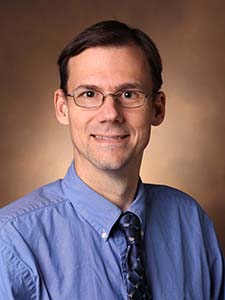
data mining and population health analytics as well as health services research in acute kidney injury, diabetes, and device safety in interventional cardiology.
In the latest edition of the Collaborator Spotlight, Michael discusses his career journey, the collaboration between OHDSI and the U.S. Department of Veterans Affairs (VA), the LEGEND initiative, and more.
Can you discuss your background and career journey?
My name is Michael Matheny, and I am the Director for the Center for Improving the Publics’ Health with Informatics and Professor in the Departments of Biomedical Informatics, Medicine, and Biostatistics, Vanderbilt University Medical Center. I am also a part-time primary care physician, physician scientist, board certified in internal medicine and clinical informatics, and Associate Director of HSR&D VINCI and the Associate Director of the VETWISE-LHS COIN Center at the Tennessee Valley Healthcare System VA, Nashville, TN. I am an elected fellow of the American College of Medical Informatics, elected fellow of the American Medical Informatics Association and elected member of the American Society of Clinical Investigation.
My career has been mainly focused in developing and adapting artificial intelligence and machine learning methods for medical product active surveillance, algorithm vigilance, probabilistic phenotyping, natural language processing, and risk prediction modeling.
How did you first get involved with OHDSI, and what has motivated you to stay actively engaged with the community?
I first became involved with OHDSI as part of the PCORI CDRN initiative, in which we were transforming VA electronic health record and claims data into the OMOP and PCORNet CDMs as part of pScanner in collaboration with Lucila Ohno-Machado. In 2015, Scott DuVall, VINCI director, reached out to recruit our team to transition from developing these resources within the CDRN to translating the ETL to an operations footing and providing them to the VA community nationally as part of VINCI. I’ve always had a passion for real-world data and large-scale observational analytics, particularly in the medical device space, and the OHDSI community continued to grow and lead in this space over time. Seeing the capacity of the OHDSI network to conduct large scale medical product surveillance and comparative effectiveness research has motivated me to stay involved beyond the infrastructure support our team provides in VINCI.
As a professor in biomedical informatics, medicine, and biostatistics at Vanderbilt, how do your students use OHDSI or the OMOP Common Data Model in their research? Have you seen it spark new ideas or career paths for them?
We have a large variety of students, fellows, and junior faculty who are able to more quickly leverage the OMOP CDM at the VA and Vanderbilt University Medical Center to conduct observational studies. In both cases, the CDM allowed the abstraction and incorporation of best practices for data transformation in both settings, to reduce the time and cost to conduct research that is important to them.
You also lead work within the VA Informatics and Computing Infrastructure (VINCI). How have OHDSI and the VA collaborated over time, and what impact has that had on research?
The VA has been an important collaborator for the OHDSI network, providing large national data for distributed analytics in many OHDSI Studies. For the VA, this is important, as it highlights where the Veteran health care experience is similar and where it is different than health care in the US or internationally. For OHDSI, it provides opportunities for robust effect estimation for comparative effectiveness studies, methods evaluations, and other study types. VINCI seeks to democratize the access of the OMOP CDM and the OHDSI tools to VA investigators nationally, and support using OMOP and OHDSI for various research projects. This is currently the central focus of VINCI’s efforts in OHDSI.
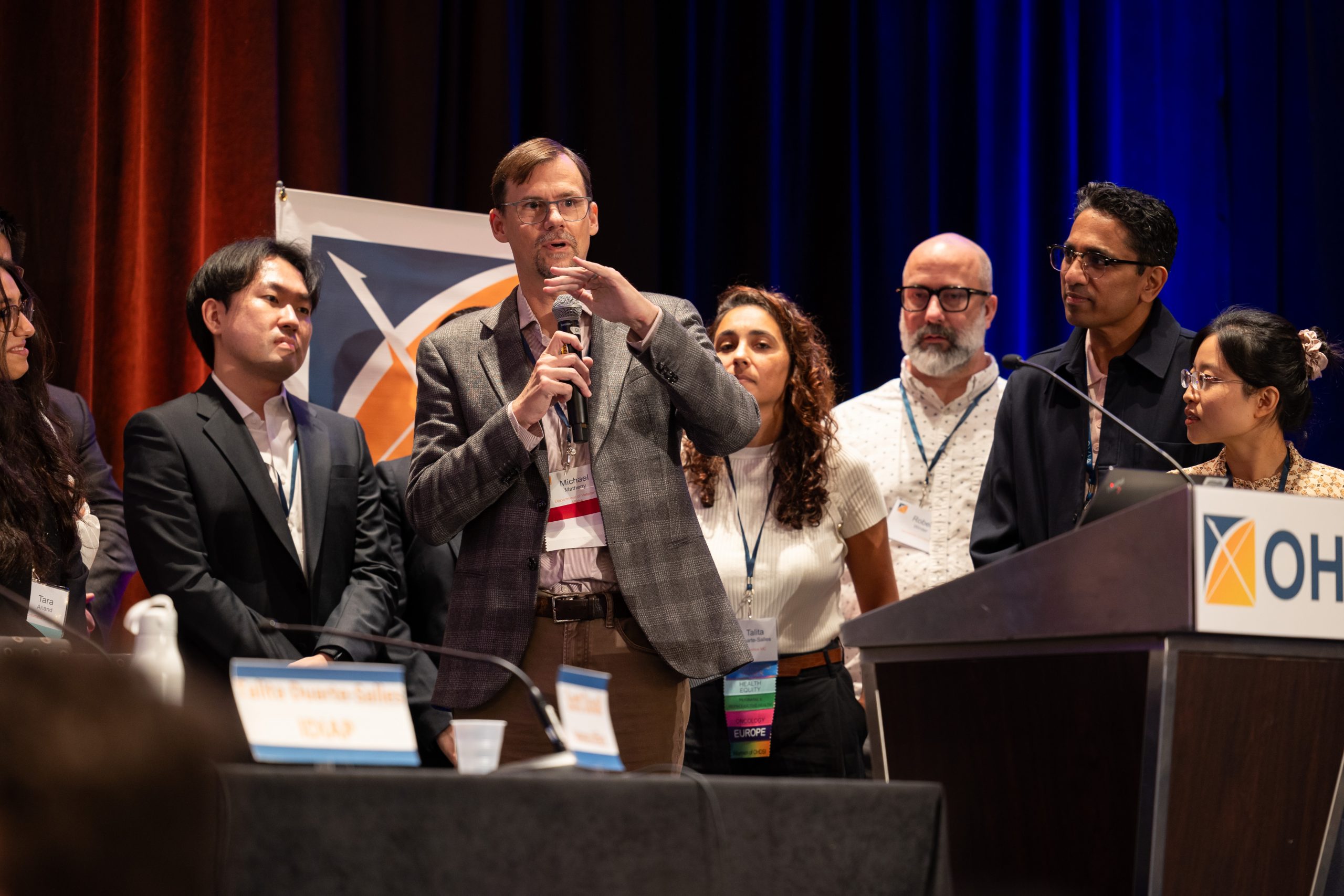 You’ve been involved in the LEGEND research team and participated in last year’s symposium panel. What are some key lessons researchers can take from LEGEND about generating reliable evidence from real-world data?
It remains critically important to conduct these types of comparative effectiveness research studies across multiple US national and international patient cohorts, as practice patterns vary significantly, and thus exposure patterns in the setting of patient clinical characteristics vary as well. While sometimes challenging to setup a robust study design, these distinctly different data sources also provide amazing opportunities for clinical inference.
You’re part of OHDSI’s Medical Devices workgroup. What excites you most about the future of OHDSI research in this area?
Medical device real-world evidence generation has struggled because of small sample sizes and device identification. As medical device data sources mature, OHDSI stands ready to deploy best practices and novel methods to conduct post-market surveillance and comparative effectiveness studies in this area, and I remain passionate about this domain, both methodologically and clinically.
What are some of your hobbies, and what is one interesting thing that most community members might not know about you?
I’m an avid Magic the Gathering card game player, enjoy a wide swath of board games and card games with friends and family, and spend time out on a boat in a nearby lake whenever possible.