Can you discuss your background and career journey?
My journey has been a blend of academia, hospitals and industry, always centered on using clinical knowledge and data to drive better health outcomes. I started my career working in the hospital and clinical research, which gave me a deep appreciation for the patient journey and the complexities of generating reliable evidence. From there, I transitioned into the biopharmaceutical industry, where I’ve spent over two decades at companies like AstraZeneca, Eli Lilly, Bayer, and currently, Gilead Sciences. In these roles, I’ve focused on building global medical evidence capabilities, particularly in the areas of epidemiology (currently known as Real-World Evidence), partnerships and collaborations, AI and digital health, data governance, data sciences and public policy. Throughout this journey, my work has extended beyond internal teams to close collaboration with external partners, including government and non-governmental bodies, regulators across the globe and various patient advocacy groups. This engagement has provided me with a different, more holistic perspective that is not solely industry-biased. It has reinforced for me that truly impactful work requires a deep understanding of all stakeholders’ needs and a commitment to transparent, patient-centric solutions.
You’ve worked extensively in pharmaceutical research and global health data standards. How has that industry experience shaped your work and perspective within OHDSI?
Coming from industry, I’ve seen how fragmented and inaccessible data can slow down innovation and generating medical evidence in a timely way. A major obstacle is the lack of standardized, interoperable data and also just knowing where and who has data you require to generate evidence needed to address a gap identified. We spend an enormous amount of time and resources just trying find out who has data, who can access data and discuss data privacy, and harmonize data from different sources. That’s why OHDSI’s mission resonates so deeply with me. My experience has reinforced the critical need for a common data model and a global research network that enables transparent, reproducible, and rapid scientific discovery. I see OHDSI not just as a research community, but as a foundation pillar for the future evidence generation and catalyst for transforming how we generate real-world evidence.
You’re currently at Gilead, which recently hosted OHDSI’s Industry Studyathon. How do Gilead and OHDSI collaborate, and what value does that partnership bring to both sides?
At Gilead, we use OHDSI’s tools and the OMOP Common Data Model to support our real-world evidence work. While there’s no formal partnership, we’re active contributors—engaging in scientific discussions, sponsoring events, and participating in community initiatives like the Industry Working Group and global symposiums.
The recent studyathon was a fantastic example of what this kind of collaboration can achieve. It successfully piloted a reproducible, tiered phenotyping framework for key autoimmune diseases—addressing the long-standing challenge of variability in disease definitions across the industry. By combining diagnostic codes, treatment data, and biomarkers, we were able to identify patient populations with both breadth and precision. This kind of standardized approach is increasingly important, especially as we face growing challenges around data access and inconsistent regulatory definitions. The framework we developed not only supports more robust and reproducible research but also lays the groundwork for greater regulatory alignment.
What made this event especially powerful was the cross-industry collaboration. Our team worked side-by-side with peers from other organizations to tackle real-world questions using shared methodologies and tools.
For Gilead, it was an opportunity to engage with like-minded industry partners to solve a common problem and connect with a global network of experts. For OHDSI, it was a chance to test and refine its tools and approaches on high-impact, industry-relevant use cases—broadening its reach and demonstrating its value across sectors.
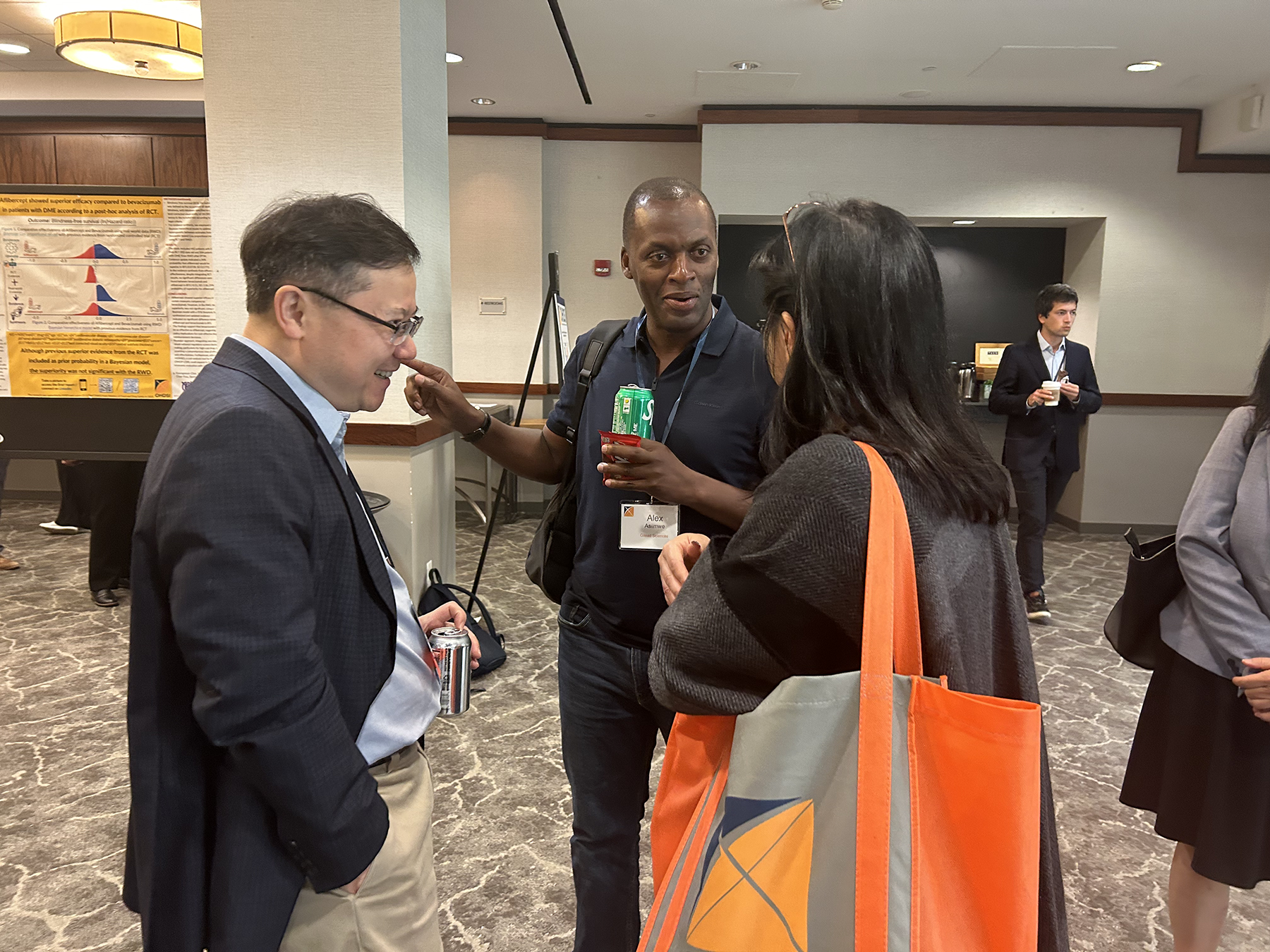 There is now an Industry workgroup within OHDSI. What steps can be taken within the community to strengthen future collaboration with industry?
The creation of the Industry workgroup is a huge step forward. To strengthen this collaboration, we need to focus on a few key areas. First, we must continue to build trust by demonstrating the rigor and reproducibility of OHDSI’s methods. Second, we need to create clearer pathways for industry to contribute, whether through data, expertise, or funding, while maintaining OHDSI’s commitment to open science. We should come up with a mechanism where industry can optimally use the data assets within the community either through direct or indirect funding. Finally, it’s important to align our efforts on a few high-impact, shared goals, such as developing tools that can directly support regulatory submissions or address critical public health questions. We need to show that this partnership isn’t just about theory; it’s about generating actionable evidence that can change lives.
As a leader in observational data and real-world evidence strategy, where do you see the biggest opportunities for OHDSI to make a meaningful impact in the next few years?
The biggest opportunities lie at the intersection of data, technology, and global health. OHDSI has the potential to become the de facto standard for regulatory-grade evidence. By deepening ties with agencies like the FDA and EMA, we can push for greater acceptance of evidence generated using OHDSI methods and drive broader acceptance of OHDSI-generated insights. There’s also huge potential in integrating OHDSI’s data model with AI and machine learning to uncover new patterns in complex datasets. Finally, and perhaps most importantly, is global expansion. By building out the network in underrepresented regions, we can address unique local health challenges and create a truly comprehensive global picture of health. Expanding OHDSI into underrepresented regions—especially LMICs—can unlock rich data sources and address local health challenges. That’s why we’re supporting the first OHDSI Africa Symposium in Kampala this November, in partnership with JCRC. It’s a step toward a truly global evidence ecosystem.
You’ve worked in both the U.S. and Europe, but you have mentioned interest in being active in the Africa Chapter for HIV research. On the eve of the first OHDSI Africa Symposium, can you talk about the exciting new research possibilities happening because of OHDSI’s growth on the continent?
The growth of OHDSI in Africa is incredibly exciting. On a continent where public health challenges like HIV/AIDS, tuberculosis, and malaria are pervasive, having a standardized data network is transformative. It allows researchers from different countries and institutions to share and analyze data in a consistent way, which is crucial for answering comparative effectiveness questions. My interest, particularly in HIV, stems from the need for more regional data to inform treatment strategies. The OHDSI Africa Symposium is a monumental step, as it will help build local capacity, foster new collaborations, and ultimately empower African researchers to address their own public health priorities with robust, standardized data. It’s about more than just data; it’s about democratizing access to powerful research tools.
What are some of your hobbies, and what is one interesting thing that most community members might not know about you?
I love playing football (at least 5 days a week) and driving on motorways—being on motorways helps me reset and often sparks new ideas (assuming I am not in traffic jam). Crazy but true!
One thing most people don’t know is that I’m a technology and history buff, especially when it comes to medicine and public health. It’s fascinating to see how past challenges mirror today’s, and it reminds me that progress comes from collaboration and innovation—values that OHDSI embodies.