
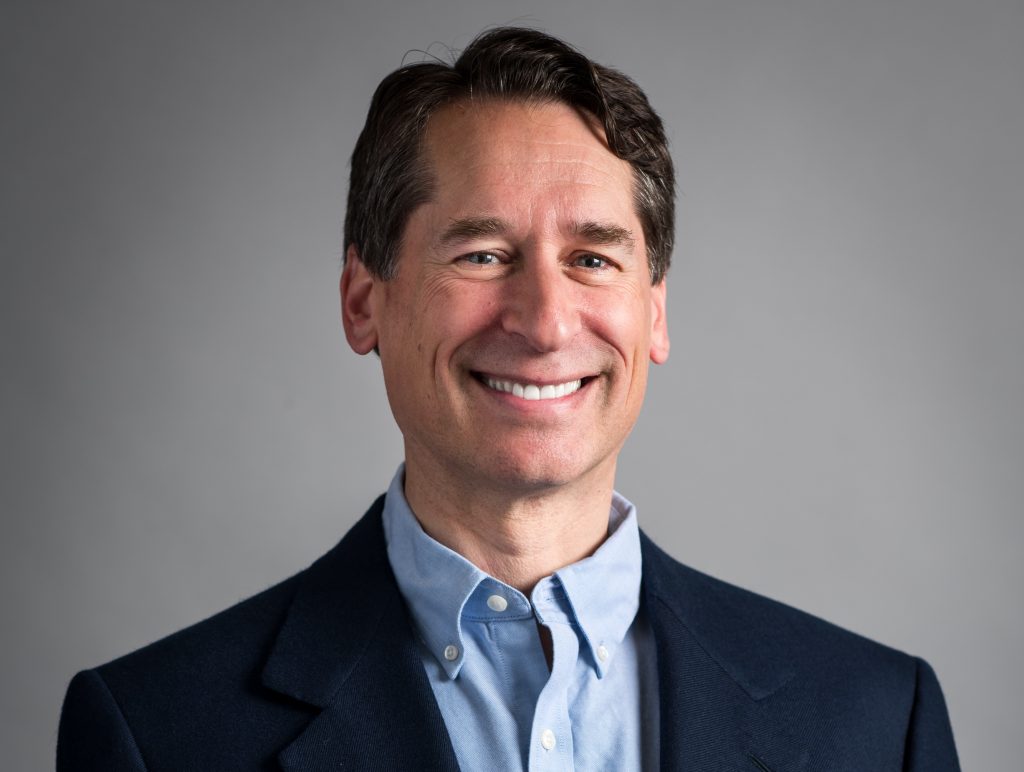
Kanter discusses his career journey, why he believes work with low- and middle-income countries can impact healthcare globally, the importance of standardized vocabularies, and more in the latest collaborator spotlight.
Can you discuss your background and career journey?
Well, actually, I did not start out as an academic. I first became interested in global health and after a formative experience in Nepal when I was 17 and this confirmed that medical school was the route I would take. Because I also was a geek, I spent a lot of time throughout my medical training working with computers and doing work overseas. Ultimately, I ended up with a medical degree and a public health degree from Harvard, a residency at the University of Washington in Primary Care/Internal Medicine with a board certification in Internal Medicine and an interest in infectious diseases. In the mid-90’s I began consulting with a company that developed an EMR which is currently being sold as Allscripts Professional. The company became Intelligent Medical Objects and then IMO Health (IMO) which now focuses on the foundational terminology used in 90-95% of US acute care facilities’ information systems. I had many roles with IMO, but I retired as Chief Medical Officer in 2022 to focus more on the global health work. All along my private sector journey I continued to focus on applying my experience to global health, and in 2006 took some time away from IMO to help lead the health information system work of the Millennium Villages Project (MVP) at Columbia University. I joined Columbia with appointments in the school of Public Health, Earth Institute and Department of Biomedical Informatics (DBMI). That’s where I met George Hripcsak and first learned about OMOP/OHDSI. MVP allowed me to develop an open-source stack of health information tools (MVG-net) for ten countries in Sub-Saharan Africa, and with help from IDRC and the Rockefeller Foundation we created the Columbia International eHealth Laboratory to carry that work forward.
You direct the Columbia International eHealth Laboratory (CIEL). Can you share what CIEL does and its impact on global health?
CIEL originally had a broad agenda involving the work MVP was doing in Africa — from developing and supporting mobile phones in the hands of community health workers (ChildCount+ and MoTech) to the facility EMR (OpenMRS) through the Health Ministry reporting system (DHIS2) and finally into a research database using Pentaho. However, with the eventual ending of our funding in 2015, CIEL now focuses primarily on supporting terminology in LMICs via the CIEL interface terminology (for OpenMRS and other systems) and the Open Concept Lab (for terminology services). CIEL has no recurrent funding but currently provides a monthly release of a standardized dictionary to more than 40 countries with maps to reference terminologies like SNOMED, ICD, RxNORM, LOINC, etc. Some countries and non-governmental organizations in Africa use the CIEL dictionary as the core of their public health information systems. This helps ensure that data collected in those countries is interoperable and higher quality than what was available before.
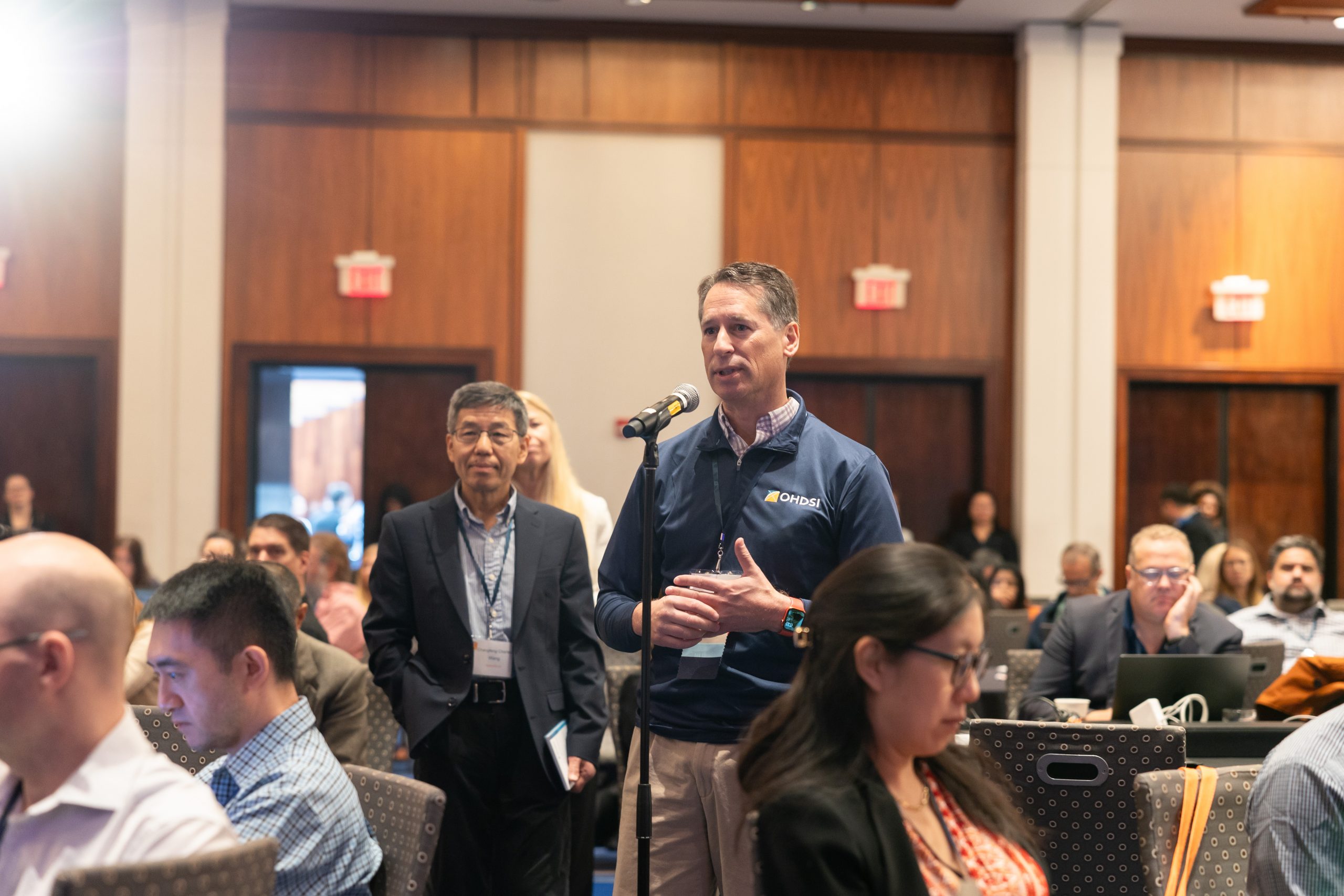 How did you first get involved with OHDSI, and what has motivated you to stay actively engaged with the community?
As part of the IMO work in the mid-90’s, we built a platform for HIV research for Glaxo known as CHORUS (for Community HIV Outcomes Research-US) that leveraged our EMR to collect observational HIV research data from four sites around the US. Overnight, the data was de-identified and shipped to Research Triangle Institute where it could be analyzed in real time. It was the culmination of my goal to see operational health information analyzed and used to improve care. So, very early on I was interested in the connection with the research community. For MVP, it was about quickly learning about what was working and not working in an integrated health and development project, so that the project could iterate and achieve the Millennium Development Goals before the deadline in 2015. Connecting with the OHDSI team at Columbia was fortuitous and a natural extension of what I was trying to do outside of the formal research community. I am pretty sure that I also got to meet Christian Reich when he came to present OMOP (at the time) to IMO.
You are passionate about improving research opportunities in Low- and Middle-Income Countries (LMICs). While we should all want the best for those nations, can you explain why improving research in LMICs actually benefits healthcare around the world?
It has become increasing clear that much of the suffering around the world is invisible to those who make decisions about priorities or how resources should be best spent. The OHDSI network is quite remarkable, but at the time I thought there was a significant gap in the representativeness and scope of the data. LMICs were not well represented, and Africa was almost entirely absent. My experience with working with MVP showed that application of information technology and research can make a difference. For example, in Uganda, by analyzing the data from MVG-net, we learned that a majority of patients who came into the clinic with fever went out the door with antimalarials even though their malarial tests were negative. We implemented a training program, rapid diagnostic testing and feedback within the EHR so that the number of test-negative antimalarial prescriptions fell dramatically. As a matter of fact, the amount of money saved on the antimalarial drugs in one year would have paid for the entire health information system. I hope that lessons learned from including LMICs more comprehensively with OHDSI will lead to better needs assessments, more effective treatments and more efficient relief of suffering for all people. It is this rationale which the Africa working group hopes will motivate Ministries of Health in LMICs (which struggle to invest in their health systems and health information systems) to include OHDSI in their national architectures.
You have done extensive work with vocabularies. Can you explain the importance of standardized vocabularies in research, and why researchers should be engaged with the updates from our vocabulary team?
Terminology is the foundation of everything we do in health. If we can’t communicate clearly about what we are doing, or about what the problems are, we can’t do a good job. Whether it is simply collecting the facts, or triggering clinical decision support, or running quality control reports, standardized terminology is required. Research is the same way. Knowing we are talking about malaria here or malaria there, it matters that malaria means the same thing (and if you try to do research data encoded with different versions of the vocabularies, you might not know that is true).
The big challenge is that there is tension between how the standard terminologies are written and what is used and needed by clinicians and users. Doctors don’t talk and document using SNOMED codes. We need to ensure that the process of collecting and analyzing the data maintains the original intent, and that often means an interface language between the information system and the standardized concepts used by OHDSI and others. That is why IMO has been so successful, and why IMO made SNOMED ubiquitous in EMRs in the US. It is also the reason the CIEL terminology is so important in LMICs. CIEL is needed to capture the specificity and even the concepts required by those settings which do not appear in reference terminologies (yet). Whenever you do not update your vocabularies, you are breaking the latest link between the intent of the data and how you analyze it. You may also be missing important distinctions which users need to do their research. So, it is important that OHDSI incorporate community contributions like the CIEL terminology, and it is important that everyone tries to stay current on the latest version of the vocabularies within their platforms.
 You have been passionate about helping build OHDSI in Africa. How much progress has taken place in helping build a community there, and how exciting is it to know the first Africa Symposium takes place next month?
There have always been researchers in Africa, and there are a lot of really smart and talented people there who have been working for years (often unnoticed). One of the great perks of working with an open source community, which allows for local ownership of software, is that you get to meet some great people who contribute (volunteer or with support). These communities need to be supported and they need to collaborate with one another. The OHDSI Africa WG is one way that we are raising awareness and providing a forum for collaboration. Integration with OpenMRS has been a priority this year, and this should make data in many African sites available to OHDSI. This past year has seen increasing participation, and the upcoming inaugural Africa OHDSI symposium will further accelerate awareness and hopefully adoption of the OMOP CDM and tooling. We hope that the symposium will make it easier to reach those other communities, the researchers and the Ministry officials that we need to move things forward.
What are some of your hobbies, and what is one interesting thing that most community members might not know about you?
For hobbies, I have always been interested in science and the true nature of reality, and have learned a lot through the study and practice of Tibetan Buddhism intersecting with Physics, Neurobiology and Ecology. Something folks might not know about me? My concern about global health has led me to work on preventing the gravest threats to health including nuclear war and climate change. I have been fortunate enough to have worked with two organizations that have been awarded the Nobel Peace Prize for this work: the International Physicians for the Prevention of Nuclear War (IPPNW) in 1985 and the International Campaign to Abolish Nuclear Weapons (ICAN) in 2017. The work is never done, but for me, it is all a continuum: from taking care of individual patients through to taking care of the planet, and I feel privileged to be working with a community like OHDSI now!