
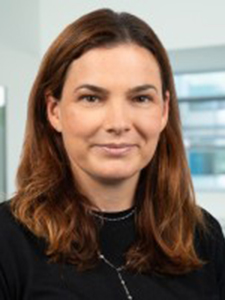
Can you share your career journey and what initially drew you to the field of medical informatics and the OHDSI community?
My journey into medical informatics began relatively late in my career and was shaped by both professional and personal experiences. I spent 19 years at IBM, working at the intersection of enterprise architecture, systems integration and large-scale digital transformation. Much of my work involved helping organizations modernize complex IT landscapes — making systems more modular, scalable and interoperable and preparing platforms for distributed and cloud-based environments. This shaped how I approach complexity today: through standardization, reuse, and designing systems that evolve over time.
A defining turning point came in 2012 with the birth of my twins at the University Hospital Dresden. During that time, I was surprised (and honestly quite shocked) to see how much of the documentation process in hospitals in Germany was still paper-based. Coming from a highly digital environments, this gap between what is technically possible and what is implemented in healthcare made a lasting impression on me.
This experience sparked my interest in how digitalization and data could improve patient care. In 2016, I began pursuing a part-time Master’s degree in Medical Informatics. When the professorship for Medical Informatics at TU Dresden was newly appointed in 2018, I joined the academic environment and focused my research on how digital health data can be transformed into actionable information and patterns, initially in the context of quality and risk management for patient safety.
Around that time, OHDSI was introduced to me as a framework for international observational research, and there were discussions about establishing capacity within Germany through the Medical Informatics Initiative (MII). Even though the MII strategically adopted FHIR and the German core data set (CDS) for standardization, OMOP offered a complementary perspective for analytics and international collaboration. For me, this created a unique space to explore the approach. I felt connected to the OHDSI community from the very beginning and it has never let me go since.
 How has your work with OMOP at the Data Integration Centre Dresden contributed to ongoing discussions around data harmonization and international collaboration within the German Medical Informatics Initiative?
At the Data Integration Centre (DIC) Dresden, I see OMOP not as an add-on, but as an integral part of our overall data infrastructure strategy. Data Integration Centres bring together data from a wide range of clinical information systems, which remains challenging due to heterogeneous structures, missing interfaces, and varying data quality. For example, medication data alone often comes from multiple sources — including hospital information systems, intensive care systems, chemotherapy systems, and tumor documentation — requiring careful harmonization and semantic alignment.
OMOP provides us with a shared, internationally grounded semantic framework that helps us structure and interpret these data more consistently. At the same time, the complexity of real-world clinical data, combined with country-specific characteristics and practices, often goes beyond what can be directly represented, requiring us to extend and refine our data modeling approaches in practice.
Through our work in Dresden, we have contributed to ongoing discussions within the MII by bringing practical implementation experience into the conversation, particularly around harmonization, international comparability, and scalable analytical infrastructures. My goal is to embed OMOP directly into our Lakehouse architecture on Spark and use it as a scalable analytical layer that supports different research contexts in a consistent way. This allows us to provide harmonized infrastructure for projects such as EHDEN, DARWIN EU, PIONEER, and DigiOne.
A key part of our work within OHDSI Germany is developing robust ETL pipelines that transform FHIR-based MII core datasets into OMOP, while also providing ready-to-use infrastructure aligned with German requirements and using OHDSI tools such as the Data Quality Dashboard to better understand data gaps and continuously improve data quality.
With the Medical Informatics Initiative (MII) coming to an end in terms of funding and Data Integration Centres now funded as infrastructures of the Network University Medicine (NUM), I see growing momentum across DICs to adopt OMOP as an enabler for coordinated multi-site research. Within the NUM-DIC project, there are active efforts to strengthen international connectivity, where OMOP and OHDSI are increasingly considered as key options. A majority of DICs have expressed their willingness to become OMOP-enabled and to participate in OHDSI studies in the coming years.
As a leader within the German OHDSI node, what are the unique challenges and opportunities of harmonizing health data within the German regulatory environment?
Germany’s regulatory environment presents both complexity and opportunity. As in many European countries, requirements around data protection and data security are high and often complex. While the availability of open-source tools is a major strength, operating them within the context of critical infrastructures such as university hospitals requires robust operational and security concepts, including approaches to risk management, patching, and vulnerability handling.
In Germany, this is further complicated by decentralized data protection governance at the federal state level, where interpretations and requirements can vary. This creates additional effort in coordination and alignment across institutions.
At the same time, I see this as a strong argument for the decentralized model of Data Integration Centres and the distributed study approach within OHDSI. Keeping data with the data owners and executing analyses locally, while sharing only aggregated, non-patient-level results, fits very well with these regulatory conditions.
Another challenge is the coordination and alignment across different national initiatives and funded projects. Bringing these perspectives together requires continuous communication and a shared understanding of goals and methods.
At the same time, these conditions foster robust governance frameworks and sustainable infrastructures. With the transition from MII toward NUM-DIC, I see increasing alignment around shared goals and growing interest in international collaboration.
 How does the collaboration between local Data Integration Centres and the global OHDSI community help ensure that German research remains both locally relevant and globally impactful?
Local Data Integration Centres contribute deep expertise in clinical workflows, data provenance, and institutional contexts. In my experience, this becomes particularly tangible when working with complex data sources such as medication or intensive care data, where understanding documentation practices and data generation processes is essential for meaningful harmonization.
At the same time, collaboration with the global OHDSI community provides shared methods, tools, and a collaborative research framework that helps us translate these local realities into internationally comparable research. In practice, this means using common study designs, shared vocabularies, and OHDSI tools while contributing our own experiences back to the community.
For the German OHDSI node, this exchange is especially valuable because it allows infrastructure development and research practice to evolve together. Engaging with the global community helps ensure that local implementations remain aligned with international best practices while addressing locally relevant research questions.
With the growth of EHDEN and various national nodes, how do you see the European OHDSI community evolving over the next few years?
I see the European OHDSI community becoming more operationally integrated and increasingly aligned with broader European developments such as the European Health Data Space. With growing infrastructure maturity across countries, cross-border studies will likely become more routine.
In the coming years, I expect stronger alignment between national initiatives and OHDSI, more shared analytics, and hopefully deeper collaboration across research communities. To me, a key aspect will be the continued development of secure processing environments, particularly through closer alignment on shared definitions and practical requirements across countries.
What is one piece of advice you would give to a data scientist in Europe who wants to start a multi-site study but doesn’t know where to find collaborators?
I would start with the OHDSI community. In my experience, connections form very quickly once you engage, whether through working groups, community calls, or simply sharing an idea. Many collaborations begin informally, so reaching out early really makes a difference.
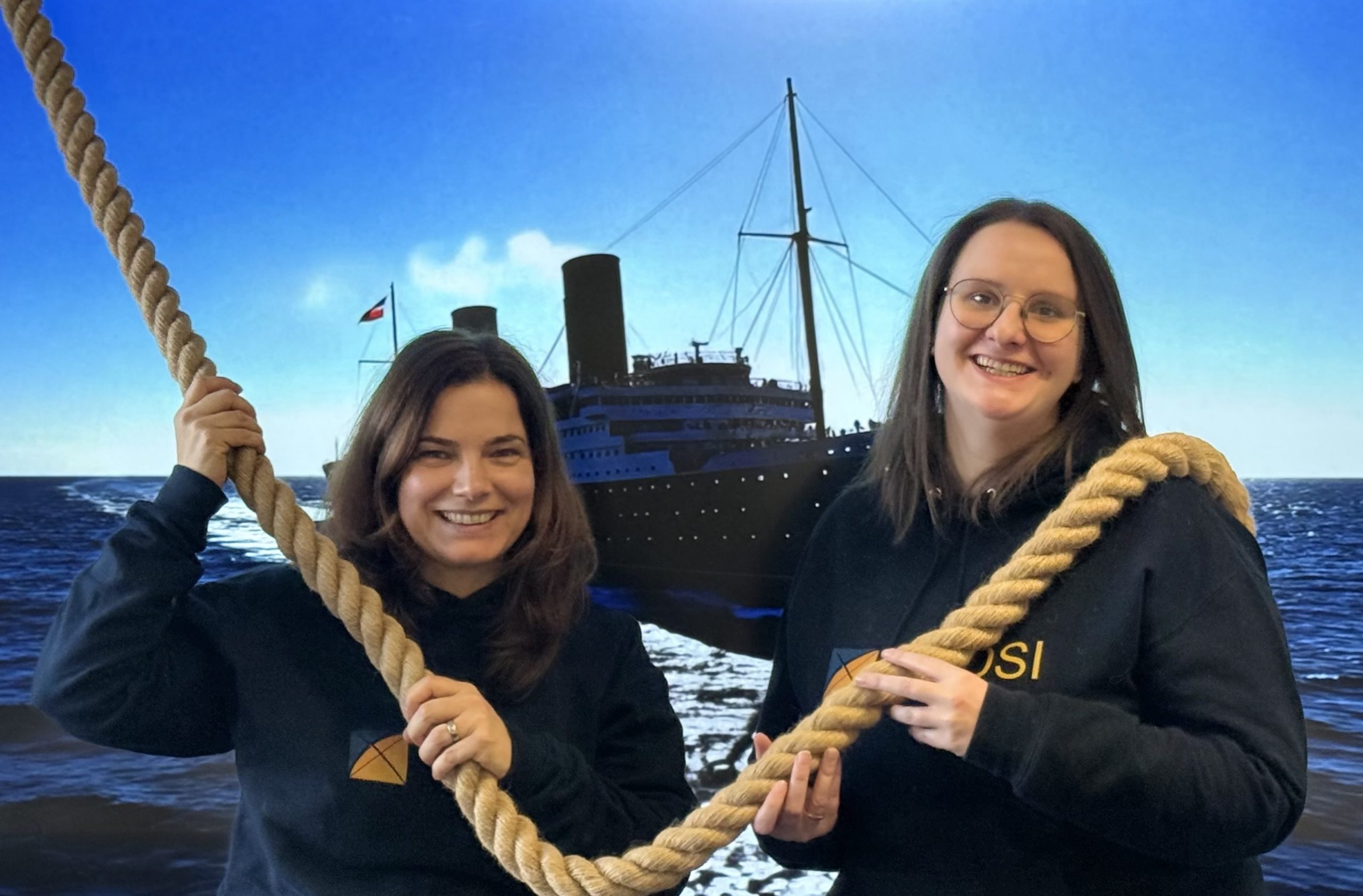 What are some of your hobbies, and what is one interesting thing that most community members might not know about you?
I love being outdoors and staying active. I’m also quite creative and enjoy to sew, draw, and make things by hand. I need this as a balance to working on a computer all day, where you rarely see something at the end, and I really enjoy creating something real.
I am a passionate runner and currently preparing for my first marathon, which I’m really excited about. Most of all, I love spending time with my husband and our three kids.