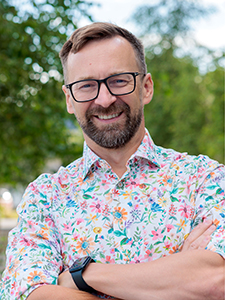
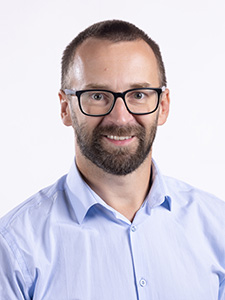
In the latest edition of the Collaborator Spotlight, Sulev discusses his journey to OHDSI, the reaction from the Estonian healthcare community following the EST-Health-30 dataset work, the value of national nodes, and more.
Can you discuss your background and career journey?
Sure! I’ve always loved writing software code, especially the kind that does cool stuff, and, most importantly, just works.
Even though I earned my Master’s degree in telecommunications and antenna engineering, I somehow always found my way back to software development. By a combination of curiosity and chance, I ended up developing software for medical registries and biobanks. That experience sparked my interest in medical and genomic data analysis, and eventually led me to start a PhD focused on computational IT solutions for personalized medicine.
From the very first month of my PhD, I became involved in the large European Medical Information Framework (EMIF) project, which was in many ways a predecessor to the European Health Data & Evidence Network (EHDEN). Through EMIF and EHDEN, I had the chance to meet many of the people who are now key leaders in the OMOP community. Since then, OMOP has been a constant part of my professional life, and I’ve been deeply involved in its adoption and development.
After defending my PhD in 2019, we started building the Estonian Health Informatics Research Group. These days, we do almost everything using OMOP — from research and analytics to international collaborations. Looking back, it’s funny how a software developer with a telecommunications background ended up spending most of his career at the intersection of health data, genomics, and real-world evidence, but I wouldn’t have it any other way.
How did you find the OHDSI community, and what has inspired you to take a leadership role in Estonia?
For me, it has been a very natural journey. It started with recognizing a practical problem: in Estonia, and actually across the world, we lacked a common data model that would allow us to efficiently collaborate and reuse analytical methods across different healthcare databases.
I still remember Patrick Ryan giving an introductory presentation about OMOP during an EMIF project meeting around 2018. The idea immediately resonated with me. Shortly afterwards, I became the first person in Estonia to seriously attempt mapping national healthcare data to the OMOP Common Data Model. What started as a small proof-of-concept, gradually evolved into the automated ETL pipelines and infrastructure that we use today.
Over the years, we have steadily grown both our technical capabilities and our team. Through EMIF, EHDEN, and many other international projects, I had the opportunity to work closely with people from across the global OHDSI community. Because of these collaborations, taking a leadership role in Estonia never felt like a deliberate career move. It was more a natural consequence of being involved from the beginning, building local expertise, and helping connect the Estonian health data community with the broader OHDSI ecosystem.
Speaking of that leadership, your team recently published foundational work on the EST-Health-30 dataset (a comprehensive, population-representative dataset consisting of complete, longitudinal health records for a randomly sampled 30% of the Estonian population) in Estonia’s leading medical journal. What has been the reaction from local medical doctors and policymakers now that they see what OMOP makes possible on a national scale?
In Estonia, the impact has been immense, especially among medical professionals. The dataset itself is not where the real value lies — the real value comes from the answers it can provide to doctors and researchers.
One of the most rewarding aspects has been hearing feedback from highly experienced clinicians. Some top specialists with more than 20 years of experience in their fields have told us that this is the first time they have seen actual nationwide numbers for topics related to their specialty. That kind of reaction really demonstrates the value of having a comprehensive, population-representative dataset available for research and evidence generation.
The interest has extended beyond the medical community as well. As a result of the attention around EST-Health-30 and the broader discussion about health data in Estonia, I was invited to write an article for the journal of the Estonian Parliament, which was published in May. The article focused on EST-Health-30 and other data-related issues in Estonia, and it generated very active feedback and discussion.
Internationally, we have not yet received as much feedback, although the dataset is already being used in several projects. The main reason is that we deliberately chose not to promote it too heavily before the peer-reviewed publication was available.
Beyond typical EHR data, your research background touches heavily on personalized medicine and pharmacogenetics. What are the unique opportunities when combining biobank/genomic data resources with the standardized clinical data of OHDSI?
I see enormous potential in bringing these two worlds together. Humans are incredibly complex organisms, and to understand health and disease properly, we need more than traditional health data like the observations, diagnoses, and treatments recorded by healthcare professionals. We also need genetics.
The challenge has always been that genomic data is orders of magnitude larger than traditional real-world data and requires very different analytical approaches and tools. Because of that, there has been an ongoing discussion about how best to combine these two data types within the OMOP framework.
I think we have now found a good balance. Rather than trying to store raw genomic data in OMOP, we have successfully integrated polygenic risk scores — essentially aggregated genetic measures with a much more direct connection to disease risk and clinical outcomes. We are currently working on a white paper to share our experience, and hopefully it can serve as a gold standard for others facing similar challenges.
At the same time, genetics is only one piece of the puzzle. Environmental exposures, socioeconomic conditions, cultural factors, and lifestyle choices all matter too. Something as simple as whether you brush your teeth regularly can have a significant effect on your health, yet we usually do not capture that information in healthcare databases. The same applies to factors such as income trajectories over time or environmental exposures. As a community, we need to think about how these broader dimensions can be integrated alongside clinical data in OMOP to create a more complete picture of human health. At the same time, it is important to keep the simplicity of the OMOP format — a key value that has paved the way for its success.
 Estonia’s first hospital OMOP implementation is now underway, and there is even a law proposal in parliament to link national health datasets using OMOP as the analytical layer. How is that transition going, and what are the unique challenges of navigating legislative changes to benefit healthcare research?
Yes, things are moving forward, although perhaps more slowly than I originally expected. State-level initiatives are inherently complex, especially when responsibilities are distributed across multiple government institutions. Every proposed change raises questions about ownership, budgets, priorities, and long-term sustainability.
Even something that seems relatively straightforward — such as linking existing national health datasets — requires legislative changes. Changing a law is naturally a lengthy process, and every proposal tends to attract scrutiny and some level of opposition. That is simply part of how these systems work.
Another challenge is that many institutions already have their own databases, infrastructure, and teams in place. From their perspective, it is often easier to request additional funding to continue working with existing systems than to start transitioning to a completely new framework such as the OMOP CDM. A significant part of the work therefore involves explaining the long-term value of standardization and demonstrating why adopting OMOP benefits them as well.
That said, progress is happening. I hear the term “OMOP” mentioned more and more often in discussions that would not have touched it a few years ago, and the government has allocated funding for the first initiatives.
I also think that as an OHDSI community we are entering a new phase. For many years, the focus was on demonstrating that a common data model works and enables large-scale observational research. Now we need to demonstrate impact — moving beyond research-only use cases and bringing OMOP closer to routine clinical practice, healthcare management, and policymaking. That transition is not easy — especially for academia, which can only showcase what is possible but not make decisions at the state level — but it is necessary.
As the lead for OHDSI Estonia, you are part of a rapidly growing network of European national nodes. In your experience, what is the greatest value of having these dedicated national networks, and how can smaller or newer nodes collaborate with established ones to accelerate their own growth?
I think national networks are valuable because their members often face very similar challenges. Across Europe, we work under the same broad legislative framework, which makes discussions about data governance, privacy, and health data use much easier. Many of the lessons learned in one country are therefore relevant to others as well.
For smaller or newer nodes, learning from established ones can significantly accelerate growth. There is no need to repeat mistakes that others have already made. At the same time, collaboration should not be one-directional. Smaller nodes often bring fresh ideas, new use cases, and different perspectives.
I also think smaller nodes sometimes underestimate their own value. Large and established nodes often lead major international studies and can be selective about which projects they join. Smaller nodes, on the other hand, are often more flexible and more open to collaboration. That can make them very attractive partners, especially for organizations looking to build something new.
What are some of your hobbies, and what is one interesting thing that most community members might not know about you?
I do Estonian folk dancing, and I’m deeply in love with Estonian folk music. For decades, I have played accordion and guitar in the folk music band Kratt (https://kratt.rahvamuusik.ee/).
I also enjoy combining traditional tunes and songs with electronic music. A few years ago, I released a collection of arrangements under the band name Linnuk, where I experimented with blending folk music and modern electronic sounds (https://linnuk.ee/).
More recently, I went back to school and completed studies in music production, focusing on how to compose, record, mix, and produce music. So while most people in the OHDSI community know me through health data and OMOP, a significant part of my life has always revolved around music.